Systems | Development | Analytics | API | Testing

Updates from Bugfender Q2, 2021

Welcome to the summer Bugfender newsletter! This quarter we’re planning a roadmap of new features and improvements to come we hope you’ll love. Crash aggregation is one of these features that will come soon to Bugfender, providing a bigger picture of your app’s crashes. Also, we’ll be doing some major UI/UX improvements to the app, since Bugfender has grown to a more mature state, and we want to keep improving the app’s usability.
Tideways 2021.2 Release

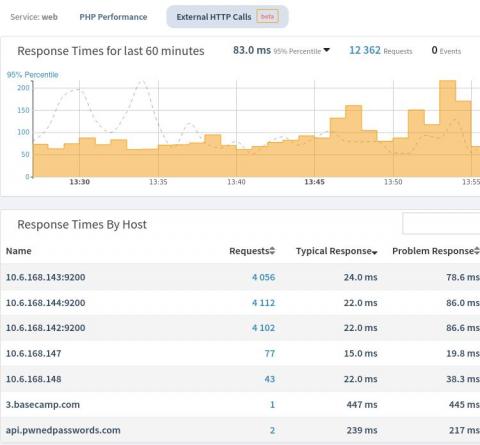
This quarterly release of Tideways includes External HTTP Monitoring, Observations about PHP Metrics and Application Configuration, a redesigned Callgraph Compare screen, the ability to name traces, a new GitHub app to synchronize users into an organization and many other features. Update to PHP Extension 5.4 and Daemon 1.7 to access all new features of this release. In this blog post we will provide a detailed overview of all the changes.

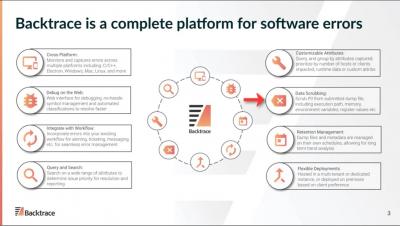
Backtrace Introduction and Demo Video

In this 10 minute video, you’ll receive a 2.5 minute introduction to the Backtrace platform, and a 7 minute demo highlighting key capabilities of the system. We open with a discussion on what types of errors can be submitted to Backtrace, and then dig deep on the Debug and Explore views. We highlight Triage briefly, and show how engineers can use Slack to be notified of new issues and immediately be brought into a Debug view.

How to Perform HTTP Requests with Axios - A Complete Guide

One of the most typical things a developer does is make an HTTP call to an API. An API request can be sent in a variety of ways. We can use a command-line tool like cURL, the browser's native Fetch API, or a package like Axios to accomplish this. Sending HTTP requests to your API with Axios is a fantastic tool. Axios is supported by all major browsers. The package can be used for your backend server, loaded via a CDN, or required in your frontend application.

Beginner's Guide To Learn SCSS

Back in the day, frontend development was all about writing CSS, HTML, and JavaScript. However, it is no more the case. Now it has become much more complex and interesting than earlier. In addition, the e-commerce industry is evolving continuously, making frontend developers stay at par with the latest frontend technologies to create and build efficient and highly optimized websites for their businesses. In today’s article, we will see a definitive guide to SCSS, what it means and how to use it.

Optimized: Using A JavaScript (JS) Profiler For Improved Performance

No matter what you’re coding, there’s always room to optimize your code and improve performance. This can be a painstaking process, and if you’re going over your code line by line you’d better cancel all your plans and forget about getting any sleep! Fortunately, there are better ways to examine and optimize your code. A JS profiler is an efficient tool to help you understand your code better – effectively finding, pinpointing and optimizing bottlenecks in your code.

JWT Authentication: When and How To Use It

JWT stands for JSON Web Token, is a famous technology that comes with its own controversy. Few people find it quite beneficial, while others feel one must never use it. Nonetheless, in this article, we shall discuss the reason behind this controversy, understand JWT in detail, and when and why one must use it. We'll cover the following section in this blog. JWT (JSON Web Token) authentication is a process or method used to verify the owner of JSON data.