
Systems | Development | Analytics | API | Testing

Perfecto: Automate End-to-End RCS Validation

Perfecto enables automated, AI-powered end-to-end RCS, SMS, and MMS validation on real cellular networks, ensuring every message is delivered, rendered, and experienced precisely as your customers expect. Learn more in this in-depth demo. With Perfecto, you can: This capability is crucial for validating retail promotions, healthcare reminders, airline status updates, conversational business flows, and more.

What is Perforce P4 (Helix Core)?

What is Perforce P4 (formerly Helix Core)? And why is P4 considered the industry standard version control system? In this overview, our Sr. P4 User Advocate, Jase Lindgren breaks down what P4 is, how it works, and why it’s trusted for massive projects—from AAA games to blockbuster films to advanced hardware development.

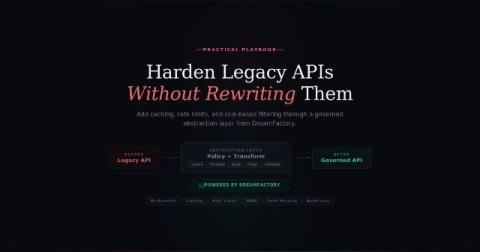
How to Extend and Harden Legacy APIs Without Rewriting Them | DreamFactory

This guide explains how to add caching, rate limiting, role-based filtering, and clean separation of logic to legacy APIs without changing backend code. You will learn a practical abstraction-layer approach that lets teams govern access, enforce policy, and improve performance while keeping stored procedures and services intact.

Setting Up a GCC in India: A Strategic Playbook for Enterprises

An important question for CXOs and strategy heads alike arises as businesses grow internationally: Are we scaling globally merely to increase capacity, or are we also building capability? Global Capability Centres (GCCs), formerly known as Global In-House Centres (GICs), fill that need by acting as strategic powerhouses that are more than just back-end support engines.

Tech in Construction: IBS 2026 Takeaways

The 2026 NAHB International Builders’ Show (IBS) in Orlando brought together building professionals and exhibitors from around the world. As a custom software partner for PropTech and ConTech, we attended to spot the technological shifts shaping the industry. The takeaway: the sector is rapidly modernizing, moving from fragmented tools toward unified tech ecosystems that drive efficiency and scale.

Q&A: How Bitrise is helping Tapcart power the next wave of world-class ecommerce

For small enterprises with big ambitions, Tapcart opens up a world of possibilities. Founded in 2017, the Los Angeles–based SaaS company is on a mission to democratize access to world-class mobile commerce tools for every brand. A big part of making that happen is its partnership with Bitrise. Few people have seen the evolution of that partnership more closely than Sahand Ansari.

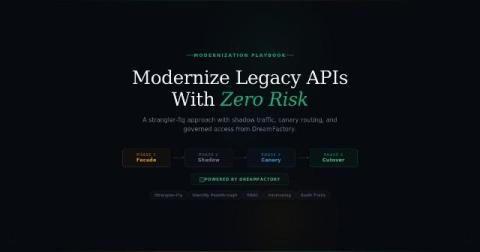
Modernizing Legacy APIs Without a Risky Rewrite: A Step-by-Step Enterprise Playbook

Modernizing fragile, undocumented APIs can feel risky in conservative enterprises. This guide shows how to prove value safely using a strangler-fig approach, traffic controls, and an API abstraction layer. You will learn how to frame a proof of concept, build a governed façade, and incrementally redirect traffic without disrupting production.

February in Node.js: Release Discipline, Security Signal, and Runtime Progression

February was not defined by major feature drops. It was defined by process hardening, structured release cadence, and continued runtime iteration across both LTS and Current lines. For production teams, this month reinforced three pillars: This is the technical breakdown of what actually mattered.

Maintaining the Vibes: How to Turn AI Coding into Enterprise Value

We are living through a renaissance in software development. In February 2025, computer scientist Andrej Karpathy coined the term "vibe coding" to describe a new state of human-computer interaction. In this model, developers stop acting like bricklayers—manually laying every line of syntax—and start acting like architects. They design the outcome with natural language, and AI handles the construction, translating their vision into working software.

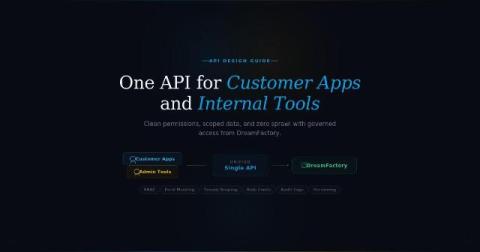
Designing Unified APIs for Customer UIs & Internal Tools with Clean Permissions | DreamFactory

A unified API serves both external users and internal operators from one contract while enforcing different capabilities and data scopes. It centralizes authentication, authorization, validation, and auditing so every consumer follows the same rules. DreamFactory defines this as one surface with segmented access aligned to jobs-to-be-done. The goal is consistent behavior across channels, fewer duplicated services, and easier change management.