

Systems | Development | Analytics | API | Testing

In the Context Economy, Context is King

Gartner published a report last week that I think marks a genuine inflection point for how enterprise technology leaders should think about AI strategy. The headline finding: we have crossed a threshold where competitive advantage in the AI era is no longer about access to data — it's about the semantic intelligence wrapped around it. Gartner calls this the "context economy," and they believe it will reshape how software is built, sold, and monetized over the next several years. I agree.

Gartner Just Described the Platform Enterprises Need to Compete in the Context Economy, Kong Already Built It

A Response to Gartner’s Latest Research Last week, Gartner published a report titled MCP Servers Will Fuel the Next AI Revenue Surge — Context as a Service (1) that should be required reading for every enterprise technology leader. Then, Kong CEO Augusto Marietti (Aghi for short) wrote out his thoughts on the subject and why context is king. I’d like to continue that conversation.

Demystifying Data Virtualization: Why it Should Become One of Your DevOps Essentials

Data virtualization can help modern organizations solve the complex challenges that come with managing data. With information scattered across multiple systems, accessing data can lead to operational bottlenecks in your organization.

Why Deployment Flexibility Matters for Enterprise Software

Choosing a software deployment model for modern organizations is complex. Regulatory compliance, data privacy, security, and operational overheads are just some of the factors that need to be considered. These factors can also change over time for reasons ranging from the introduction of new government regulations, to changing business models, to business expansion to new geographies, and more.

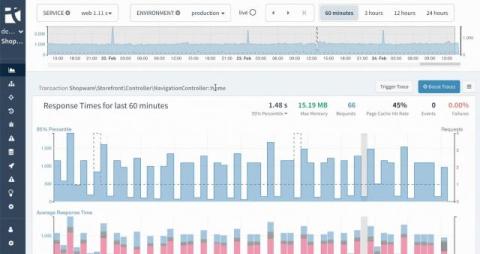
Tideways 2026.1 Release

We’re rolling out a new wave of improvements across Tideways in our first Release of 2026, focusing on deeper visibility, smarter automation, and broader ecosystem support. From automatic tracepoints for selected transactions and improved exception workflows to enhanced FrankenPHP worker-mode instrumentation, these features continue to reduce manual effort while increasing observability.

Unified Document Processing: Why Standalone IDP Can't Compete with End-to-End Document Automation

Intelligent document processing (IDP) promised a paperless future for businesses and organizations. But despite significant investment, a critical gap often persists between the technological capability to extract data and the organizational ability to actually drive meaningful business outcomes. 78% of enterprises are now operational with some form of AI-powered document processing, yet 52% of staff time remains consumed by manual document tasks.1 This paradox reveals the new IDP market reality.

Kotlin Annotations Explained: Guide for Android Developers

Kotlin annotations allow compilers or libraries to understand our code. These metadata tags don’t directly change code logic, but they help modify how it is interpreted, optimized, or validated. This simplifies Android development by automating repetitive tasks and ensuring consistent code behavior. It also improves code readability, reduces boilerplate code, and introduces automated checks and generation.

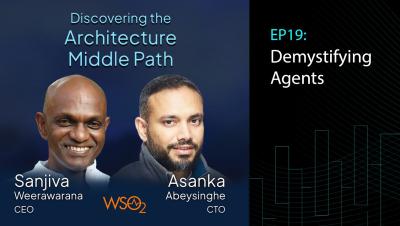
EP 19: Demystifying Agents

In this episode, *Dr. Sanjiva Weerawarana* and *Asanka Abeysinghe* demystify what “agents” really are and why architects should care. They walk through core concepts and terminology—agents, agent loops, prompts, context, memory, RAG, tools, MCP, and skills—and discuss how agents observe, act, and evaluate. The conversation compares agents to traditional systems, explores where agents fit in modern architectures (including solo agents, agent-to-agent patterns, and multi-agent setups), and looks at orchestration challenges.

Running OpenClaw Responsibly in Production | DreamFactory

OpenClaw adoption is accelerating fast, and so are the security incidents. Within two weeks of broad adoption, over 42,000 gateway instances were found exposed to the public internet with no authentication. Nearly all of them had authentication bypasses. Eight were completely open with full shell access. Meanwhile, 341 malicious skills were confirmed on ClawHub, and infostealers like RedLine and Lumma are already targeting OpenClaw installations to harvest API keys.

Why Python is Dominating High-Performance Computing

High-Performance Computing (HPC) has traditionally been an exclusive club. If you wanted to run massive simulations or crunch petabytes of data, you had to leverage the predominant languages used on supercomputing hardware—usually C, C++, or Fortran. Although fast and efficient, these languages demand strict memory management and complex syntax that require strong software development skills. Without them, development time can slow down significantly. But the landscape is shifting.