Systems | Development | Analytics | API | Testing

Modern Software Development For Today's Systems & Applications


8 Leading Platforms for Automated Software Delivery With AI Agents
Software delivery automation is moving beyond pipelines. CI/CD can compile code, run tests, build artifacts, and execute predefined deployment steps. AI agents add something different: the ability to interpret engineering work, gather context, choose what should happen next, respond to failed checks, coordinate tools, and continue working toward an outcome.

8 Best AI SRE Tools for Platform Engineers
A Kubernetes deployment succeeds, but the application starts returning errors. CPU utilization looks normal, yet response times climb. An autoscaler adds capacity without improving performance, and the on-call engineer spends the next hour moving between dashboards, deployment histories, logs, and configuration files. The difficulty is rarely a lack of monitoring data. It is determining which signals matter, how they relate, and what action will restore service without introducing another failure.
Codemagic Patch now supports Ionic Capacitor: OTA updates for your web layer
Codemagic Patch ships live updates of HTML, CSS, and JavaScript to Capacitor, Ionic, and Cordova-on-Capacitor apps, without a new store binary. Say a checkout button stops working on some Android 15 devices, and the fix turns out to be four lines of TypeScript. In a Capacitor app, those four lines live in the web layer, inside a WebView, nowhere near native code.

Your Holiday Checkout Is the New Mall #blackfriday #ecommerce #loadtesting #cybermonday #devops
With gas prices driving shoppers online, load test your site with Speedscale to ensure high holiday traffic and slow speeds don't crash your checkout page on Black Friday.
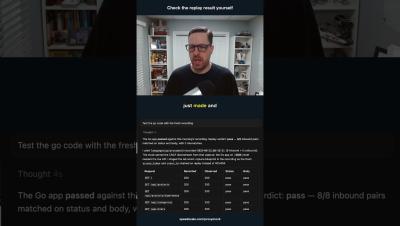
Setting Up Simple Test Automation from a Recording #golang #softwaretesting #testautomation #devops
Learn how to easily set up and run automated tests for your Go code using recorded replays, then try running your own test replay today! Read more: speedscale.com.
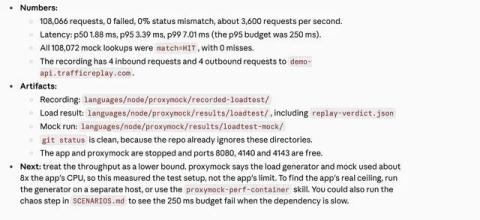
Holiday readiness: run your first load test with skills
Before you can answer whether checkout will survive Black Friday, you need a test you can rerun. In this demo, we used a coding agent and the Speedscale skills to record a Node app, mock its downstream API, and run a 30-second load test with 10 virtual users. That’s a small first step in holiday readiness. It gives you a working test and a result to inspect, with time left to fix what you find before a code freeze.
How Traffic Context Helps AI Agents #apitesting #devops #developertools #aiagents #techtips
Inspect your inbound and outbound API calls in detail to give your AI agent the exact traffic context it needs; use the link to get started! Learn more: speedscale.com.
Load Test PostgreSQL Instantly using Production Recordings
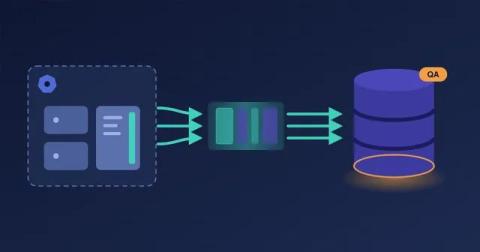
The first PostgreSQL post ran on a laptop: a demo app, a Docker container, and the proxymock CLI. That is the fastest way to see the idea. It is also not where your database problems live. Your real query mix lives in the cluster, where a Java service with a connection pool, an ORM and a schema migration tool sends the statements nobody wrote by hand. This post deploys an open source banking app to Kubernetes and records the queries one of its services sends to PostgreSQL.

Wherever your config lives: Repo-stored and modular bitrise.yml
Most CI tooling makes you pick a side. Visual editing or code. Git as your source of truth or a decent place to edit. A config small enough for one file, or a modular structure your tooling flattens the moment you touch it. The Bitrise Workflow Editor does not ask you to choose. It meets your config where it lives. One file or forty, stored on Bitrise or in your repo. This post covers both, in that order.