Systems | Development | Analytics | API | Testing

The AI Code Explosion: Why Your Mocking Strategy is Breaking Down

The rise of AI-assisted coding has transformed how software is built. With tools generating entire features in seconds, the bottleneck is no longer writing code—it’s verifying it. Because AI can generate boilerplate and handle API integrations instantly, more service changes are being pushed into authentication logic, API calls, and configurations. Teams desperately need a way to verify these changes before merging, especially when the code touches external dependencies.

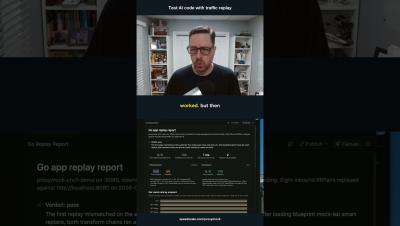
Testing AI Code is a Security Nightmare? #Speedscale #DevOps #Kubernetes #AICoding #SoftwareTesting

AI can write a feature in seconds, but where are you testing it? Sending production traffic, API payloads, and auth headers to a third-party SaaS is a massive security risk. In this video, we break down why the Bring Your Own Cloud (BYOC) model is the ultimate fix for DevSecOps. Learn how to safely test AI-generated code against real production traffic entirely within your own VPC or Kubernetes cluster. No data leaks, no massive DLP pipelines, and no endless masking rules.

The Bug Hiding in Your Production Traffic

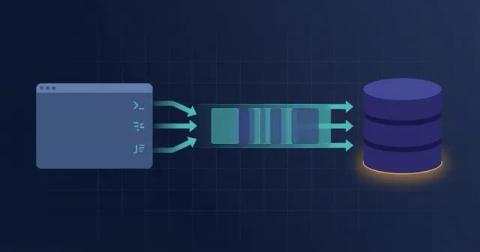
Your logs showed 500 errors. The traces showed the dependency graph. Neither showed the actual bug, a DEL control character getting appended to the query string. This is how I found it. In this video I walk through Speedscale BYOC (bring your own cloud): capture real production traffic, store it in your own Elasticsearch cluster inside your VPC, pull it down locally with a single script, and reproduce the exact bug using proxymock. The data never leaves your environment.

Logs told me something broke. Traffic showed me what.

Here’s a problem I run into constantly: something breaks in production, I can see the 500 errors in my logs, but I can’t reproduce it locally. The trace shows me the dependency graph but not the actual request that failed. This is especially painful in microservices. I was looking at a CNCF example the other day (a simple demo app, like 4 pods) and it already had so many cross-service dependencies that understanding what broke required looking at the whole system at once.

Your AI agent is fixing the wrong service

Everyone wants an AI agent factory in 2026. Autonomous agents fixing bugs and shipping features while you sleep. I’ve been building toward that myself. But the error rates don’t support the fantasy. The best AI coding agents in the world fix about 50% of real bugs on SWE-bench verified. Half the time they fail. And AI-generated code produces 1.7x more issues than human-written code.

AI for DevOps: Fueling Innovation at Scale | Full DBTA Webinar

AI innovation moves fast, but without compliant data access, even the best ML, AI, and analytics initiatives can stall. In this webinar roundtable, experts from Perforce Delphix, 3T Software Labs, and Redgate explore how organizations can accelerate AI delivery without compromising data privacy, security, or compliance. You’ll hear practical insights and real-world examples on how to remove one of the biggest bottlenecks in modern software and data workflows: access to safe, usable, production-like data.

Instant Java Client SDK, no spec required!

Learn how to generate a client SDK for a production service when you have no documentation, no OpenAPI spec, and no remaining team knowledge of the original Ruby code. This demo shows you how to capture real production data from a running app and transform it into a functional Java client library in minutes. Visit proxymock.io OR speedscale.com to learn more.

Stop building your modular mobile app the slow way

Your CI pipeline worked fine when the app was young. Then the app grew. Features got split into modules. Teams formed around those modules. And somewhere along the way, what used to be a 4-minute build became a 25-minute one. Then 35. Now nobody pushes to main before lunch because the queue is already backed up. If this sounds familiar, you are not alone. According to Google’s 2024 Developer Survey, 83% of Android apps over 500,000 lines of code struggle with build performance.

React Native OTA Updates: What You Can (and Can't) Deploy Over the Air

Over-the-air (OTA) updates are one of the most powerful tools available to React Native teams. The ability to push changes directly to users’ devices without App Store review, without Google Play approval, without any action required from the user, meaningfully changes how fast a team can respond to bugs and iterate on their product. But OTA updates operate within clear boundaries. Misunderstanding those boundaries leads to two distinct problems.