Systems | Development | Analytics | API | Testing

HIPAA Compliance Requirements for SaaS Providers: Practical Guide

Imagine a fast-growing SaaS startup finally wins a major healthcare client. Excitement fills the room until they are hit with a reality check: without meeting HIPAA compliance requirements, they can’t legally handle patient data. For SaaS companies, this isn’t just about compliance, it’s about building HIPAA compliant SaaS solutions that clients can trust. Out of nowhere, the deal goes from being an innovation deal to being a survival deal.

Future-proof test automation with Tricentis Tosca and MCP Server

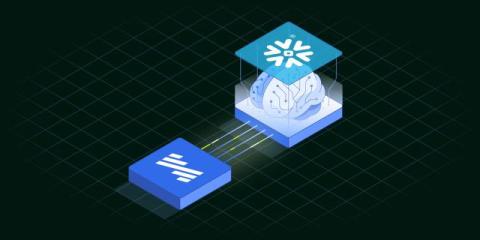
The future of testing is AI-driven, business-oriented, and no-code. Exclusively available for Tosca in the cloud, Tosca’s Model Context Protocol (MCP) Server is a game-changer. It provides a consistent, standardized, and open framework that connects your AI models to Tosca — no need for custom and inflexible API integration. Whether generative, agentic, or any future AI innovation, MCP bridges the gap between AI and QA tools, enabling seamless integration and smarter, faster testing.

RAG for SQL Server, MySQL, Postgres - Best Practices for Secure AI + Database Integration

Retrieval-Augmented Generation (RAG) lets LLMs deliver current, context-rich answers by fetching live data—customer records, knowledge articles, metrics—from SQL Server, MySQL, and PostgreSQL. Reports suggest RAG can boost answer accuracy dramatically (in some cases up to 90%), making it compelling for BI, support, and operations. The challenge: enabling on-the-fly retrieval without opening security, compliance, or scalability risks. Executive takeaway: Don’t let LLMs write SQL.

What Is Random Testing In Software Testing?

Software testing is so crucial in the SDLC. People use many types of testing like API testing, integration testing, unit testing, and so on to check the quality of the software and detect bugs. But one test which people don’t care about is random testing, though it plays a vital role in ensuring software reliability. In this blog, let’s see what random testing is, why you need to perform it, its types, and also how to perform it effectively.

Unlocking API Analytics for Product Managers

Meet Emily. She’s an API product manager at ACME, Inc., an ecommerce company that runs on dozens of APIs. One morning, her team lead asks a simple question: “Who’s our top API consumer, and which of your APIs are causing the most issues right now?” For Emily, that’s not a simple question at all. She doesn’t have direct access to these insights. Instead, she has to reach out to the engineering team.

From Data to Decisions: How AI-Powered Analytics Speeds Up Business Impact

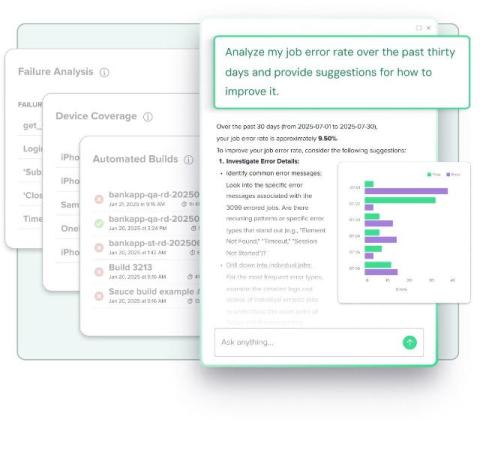
Most organizations are swimming in data, but still struggle to turn it into clear decisions. AI-powered analytics bridges that gap by automating routine analysis, surfacing hidden insights, and making data accessible to everyone through natural language. Instead of just looking at what happened, teams can understand why it happened and what to do next. The result is faster, smarter decision-making and a stronger competitive edge. Provide your users with the latest AI-powered analytics features.

Is Database Subsetting Enough? How to Avoid Test Data Risks and Slowdowns

Many organizations turn to database subsetting for various reasons. For one, cloning entire terabyte datasets could bankrupt your cloud budget. And masked data could leave your teams fumbling with unrealistic test scenarios. Why wouldn't you just grab the data you need? Sometimes, it really is that straightforward. For certain use cases — like lightweight testing scenarios, proof-of-concepts, or applications with simple data structures — subsetting delivers exactly what it promises.

Mastering Kubernetes Testing with Traffic Replay

Kubernetes has become the backbone of many modern application deployment pipelines, and for good reason as a container orchestration platform, Kubernetes automates the scaling, deployment, and management of workloads, allowing developers to make their applications easier to manage and deploy at scale without worrying about their service’s dependencies, their user’s operating system, or the intricacies of their data center or infrastructure provider.