Systems | Development | Analytics | API | Testing

Closing AI-generated test gaps with qTest & SeaLights

In today’s fast‑moving software world, release velocity keeps climbing, and AI is accelerating it even further. To keep quality teams aligned with rapid change, we’ve brought together two powerful capabilities: Tricentis SeaLights’ deep code-level insights and Tricentis qTest’s intelligent test management and AI-generated test creation. Here’s how these technologies integrate to create a complete, AI-driven testing feedback loop.

Scaling Gherkin Software Testing for Modern QA Teams

Adopting Behavior Driven Development (BDD) starts with enthusiasm. The first fifty scenarios are easy to write. They clarify requirements and align the team. But somewhere around scenario, the reality of Gherkin software testing sets in. Feature files become bloated. Scenarios start to conflict. The "simple" English syntax that was supposed to bridge the gap between business and technical teams becomes a maintenance nightmare that requires constant refactoring.

Appends for AI apps: Stream into a single message with Ably AI Transport

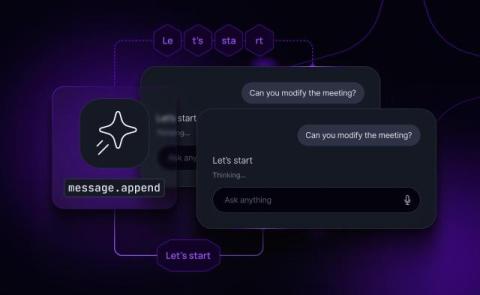
Streaming tokens is easy. Resuming cleanly is not. A user refreshes mid-response, another client joins late, a mobile connection drops for 10 seconds, and suddenly your “one answer” is 600 tiny messages that your UI has to stitch back together. Message history turns into fragments. You start building a side store just to reconstruct “the response so far”. This is not a model problem. It’s a delivery problem That’s why we developed message appends for Ably AI Transport.

ClearML Enterprise v3.28: Usage Metering, Policy Enhancements, and Smarter Admin Controls

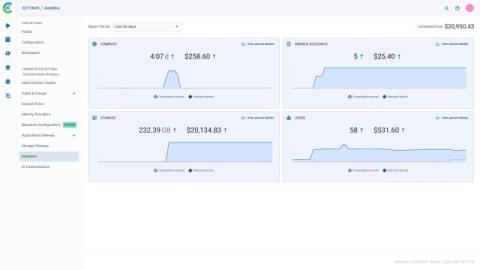
Author: Adam Wolf ClearML Enterprise v3.28 offers new features and improvements to help administrators monitor usage, enforce policies, and streamline operations across large, multi-team environments. This release introduces enhanced usage metering with a simplified interface, improved resource policy management, improved dataset controls, and UI enhancements to provide greater clarity, control, and productivity for AI teams.

Optimizing Bitrise Build Cache clients

Having a build cache solution is a powerful way to speed up builds, especially at scale. Bitrise Build Cache already accelerates builds across multiple ecosystems, but to get the most out of it we also need to optimize the build cache clients themselves and ensure stability across changing network environments. In this blog post, I’ll walk through the steps we took to improve stability and performance for Bitrise Build Cache customers.

OpenTelemetry vs. Deep Runtime Telemetry: Which Is Better for Your Node.js Stack?

If you're running Node.js in production, you've likely heard the buzz around OpenTelemetry. It's the industry standard for observability, backed by major vendors, and it promises vendor-neutral telemetry collection across your entire stack. For many teams, it's a game-changer: finally, a unified way to collect traces, metrics, and logs without getting locked into a single vendor's ecosystem.

From APIs to Agentic Integration: Introducing Kong Context Mesh

The promise of agentic AI is clear: autonomous systems that can reason, plan, and act on your behalf. But there's a fundamental problem standing between that vision and enterprise reality: agents need context to make decisions, and that context lives scattered across your organization. Context is any data — or any abstraction that enables access to data — that an agent needs to do its job. Customer records in your CRM. Inventory levels behind your fulfillment APIs.

Disaster Recovery in 60 Seconds: A POC for Seamless Client Failover on Confluent Cloud

I’ve worked with Apache Kafka since 2019, and deciding how to design and implement client failover was a sticking point in almost every use case I dealt with. Even for Confluent customers—who have the benefit of features such as Confluent Replicator, Multi-Region Clusters, and Cluster Linking—ensuring seamless failover between Kafka environments is a challenging problem.

Security Testing Explained: Protecting Modern Applications And Apis

Security testing helps identify weaknesses in software before attackers can exploit them. It protects sensitive data, ensures system stability, and controls user access. With web, mobile, and API-based applications growing rapidly, security threats are increasing. Security testing helps teams detect risks early, prevent breaches, and meet compliance standards.