Systems | Development | Analytics | API | Testing

Mobile App Development Cost: A Detailed Breakdown for 2026

With an ever-growing user base of approximately 6.7 billion active smartphone users globally, mobile apps have become an integral part of our modern existence and digital transformation. Recognizing their omnipresence and revenue-generating potential, it becomes imperative not to overlook their significance. Nevertheless, one of the initial queries posed by clients while presenting their app concepts to us revolves around understanding the app development cost.

How much is the cost to develop a flutter app?

When it comes to developing cross-platform apps, Flutter is one of the top choices that comes to developers' minds. But, what’s the reason behind it? Thanks to the innovative cross-platform development capabilities offered by the Flutter framework, creating native applications for both Android and iOS platforms has become remarkably simple.

With AI coding, the delivery pipeline is the new bottleneck - and we already solve it

For fifty years, the hardest part of software was writing it. That's no longer true. In 2025, AI coding assistants went mainstream — 90% of developers now use them (DORA 2025). Then came background agents: autonomous systems that take a ticket, write the code, run the tests, and open a pull request while the engineer sleeps. Stripe merges over 1,000 AI-written PRs per week. Ramp reached 30% AI-authored PRs within two months. Spotify has merged 1,500+ agent-generated PRs into production.

Kong Insomnia Named in Gartner's Market Guide for API and MCP Testing Tools

We’re proud to share that Kong Insomnia has been recognized as a vendor in the Gartner Market Guide for API and MCP Testing Tools in February, 2026. In a rapidly evolving landscape where AI-driven integration and MCP servers are reshaping how APIs are built, tested, and consumed, being recognized by Gartner validates what our community and customers already know: Insomnia is a serious, enterprise-ready platform for modern API development and testing.

Bringing Real-Time Streaming to Qlik Open Lakehouse

The appetite for real-time data continues to grow. Across industries, the ability to act on data as it arrives is increasingly central to how leading organizations compete, from IoT and fraud detection to event driven analytics and AI agent architectures. Streaming data is no longer a specialist workload. It is becoming a core requirement. I am excited to announce that streaming ingestion is generally available in Qlik Open Lakehouse, part of Qlik Talend Cloud.

What millions of mobile builds reveal about high-performing teams: A conversation with Arpad Kun

‍Mobile development has a reputation for being slow, complex, and harder than it needs to be. Platform quirks, rigid review gates, and ever-growing app complexity can make it feel like the toolchain is working against you. But the data tells a different story. We analyzed tens of millions of builds across thousands of mobile teams on Bitrise, spanning three years of real-world data from 2022 to 2025. The results challenge some common assumptions, and confirm others.

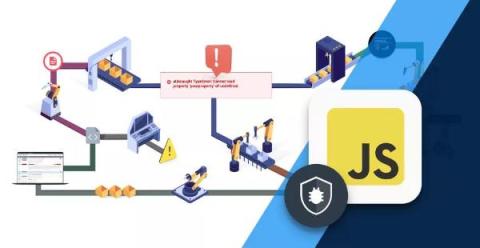
JavaScript Exception Handling: try, catch, throw, async & Best Practices

Exceptions are inevitable. It’s how we deal with them that matters. An effective exception handling regime is the difference between an app that only works in sandbox and one that can adapt and scale in the real world. JavaScript can throw up all kinds of weird and wonderful exceptions, because it runs in inherently unpredictable environments. So we’ve put together this guide to give you a clear, repeatable plan for handling them.

Spring Boot API Testing: A Practical Guide for Enterprise Teams

Enterprise Spring Boot APIs should be tested at three levels: unit tests for business logic, integration tests for external service behavior, and traffic replay for production edge cases. Most teams only do the first. This guide shows all three using a real Spring Boot application that calls external APIs (SpaceX, US Treasury) with JWT authentication. The kind of service that looks simple in development and breaks in production.

Debugging Encrypted Microservice Traffic with Speedscale's eBPF Collector

Production bugs that only reproduce in actual traffic can be some of the most frustrating bugs in software development. You can stare at your logs, add traces to your code, add instrumentation – and still not be able to see the actual requests that went over the wire. And that gets even harder when the requests are encrypted and the system is a black box. You can use tools like Wireshark or Kubeshark to capture the requests.