After being recognized by Gartner as the leading generative analytics experience for augmented analytics, ThoughtSpot’s SpotIQ just got an upgrade. As an integral part of ThoughtSpot’s core platform for nearly seven years, SpotIQ has unlocked the value of billions of rows of data for hundreds of customers. Even more inspiring are the customer testimonials highlighting how SpotIQ empowers business users to perform complex analytics and analyze key metrics—even on the go.
We are thrilled to announce the general availability of the Cloudera AI Inference service, powered by NVIDIA NIM microservices, part of the NVIDIA AI Enterprise platform, to accelerate generative AI deployments for enterprises. This service supports a range of optimized AI models, enabling seamless and scalable AI inference.
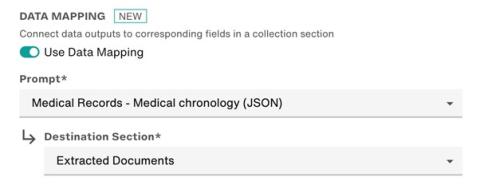
AI has entered many aspects of data integration, including data mapping. AI data mapping involves smart identification and mapping of data from one place to another. Sometimes, creating data pipelines manually can be important. The process might require complex transformations between the source and target schemas while setting up custom mappings.
Companies use a wide range of both artificial intelligence (AI) and automation tools, and each automation tool serves a different purpose, often working together to boost efficiency. In this blog, we’ll explore the differences between AI and automation, how they can complement each other through intelligent automation, and five real-world examples of how they work together. We’ll also highlight the benefits of using AI in business process automation.
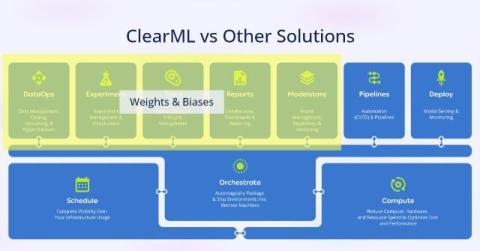
At first glance, ClearML’s AI Development Center and alternatives such as Weights & Biases seem to offer similar capabilities for MLOps. For example, both solutions support experiment management, data management, and orchestration. However, each product is designed to solve a different use case. It is important to understand how these approaches affect the user experience.
AI has profoundly impacted the life sciences industry for the past couple of decades. In the 2000s, researchers were able to use AI to analyze the human genome, identifying genetic markers and variations that could predict an individual’s susceptibility to certain diseases. This opened the door to personalized medicine and more effective therapies for genetic disorders.
The last decade has seen a giant shift by organizations into the cloud for software, storage, and compute, resulting in business benefits ranging from flexibility and lower up-front costs to easier maintenance. But lately we have seen more and more companies re-evaluating their cloud strategies and opting to move their data back to on-premises infrastructure due to several key factors.