Systems | Development | Analytics | API | Testing

LLM Testing Checklist: 50 Validations Before Production

A financial services startup launched its AI assistant without doing a proper LLM testing checklist. Within 72 hours, it gave three customers dangerous advice, telling them to withdraw their retirement savings and invest in penny stocks. The problem? The advice was completely made up. There was no validation, no factual grounding, just confident and detailed responses that were entirely wrong. The company then spent the next six months addressing regulatory issues and rebuilding customer trust.

Leveraging AI For a Better API Strategy

“API strategy” is a term prominently established in the ecosystem and heavily discussed, implemented, and followed by organizations. The term is more relevant now since API strategy has become, for the most part, AI strategy, since AI agents and services are now consuming APIs and tools to work towards business-specific goals under human tutelage. So the longstanding definition and scope of API strategy must take into account AI consumers.

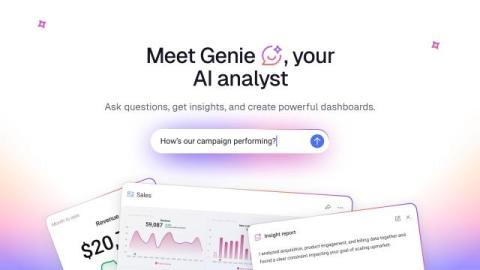
New: Ask your data anything, and get clear answers in seconds

You know that moment. You open your dashboards, and something in the numbers looks off. Revenue is trending down, the pipeline feels lighter, or your campaigns aren’t delivering the results you expected. You can see the numbers, but you need to understand what’s happening and whether this is a short-term fluctuation or an early signal of something bigger. So you start digging. You move between dashboards, compare time periods, cross-reference metrics, and pull in context from different teams.

Operationalizing the Model Context Protocol: Unified Governance with the WSO2 MCP Gateway

The WSO2 API Platform offers an MCP Gateway that sits between MCP clients and the MCP servers they use, applying security, access control, rate limits, observation, and policy enforcement across all tool calls. Instead of requiring teams to write these controls directly within their MCP servers, the platform extends its existing API governance layer to cover MCP traffic.

Application integrity: The new standard for AI-era software quality

Over the past few years, we’ve watched coding velocity accelerate at an extraordinary pace. AI has completely disrupted how developers build software. Agentic tools can now generate clean code faster than ever before. While AI has turbocharged code generation, code review, and code-level testing, it’s created a massive strain on the rest of the software development lifecycle.

AI/LLM Testing Services

Most teams think they are testing their LLM features. They run a few prompts during development, check that the responses look reasonable, and then ship the feature. Three weeks later, a user enters a strange edge case into the input field. The model confidently gives an answer that is factually wrong, slightly offensive, or completely unrelated. The team spends two days trying to understand what went wrong. In the end, they realize there was no real test coverage, only quick visual checks.

ClearML Launches Platform Management Center to Bring Financial Clarity to Enterprise AI Infrastructure

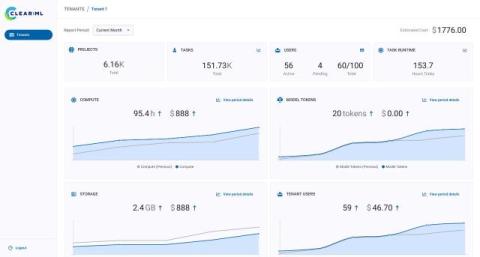
At GTC 2026, ClearML announced the general availability of its Platform Management Center, an administrative dashboard purpose-built for IT administrators and AI platform leaders managing multi-tenant ClearML deployments at enterprise scale. Available under the ClearML Enterprise plan, it gives cluster admins a single place to monitor every tenant’s activity, resource usage, and costs while protecting the privacy of tenant workloads and data.

AI Doesn't Know Your Industry. Spotter Does.

We launched Spotter with one goal: give every enterprise team their own analyst—an agent that reasons through business complexity, validates its own outputs, and surfaces answers you can actually act on. The response from customers made one thing clear: the ThoughtSpot foundation works. Teams trust Spotter, because it doesn’t only rely on an LLM to reconstruct your business logic on the fly—a process that produces different answers depending on how a question is phrased.

The new rules of QA for AI-driven finserv

Contents AI is now embedded across the entire software development lifecycle. Developers use it to generate code. Product managers use it to prototype features. Teams use it to move from idea to deployment faster than ever. Code moves faster. Features ship more frequently. Iteration cycles shrink. Across industries, companies that embrace this speed have a distinct competitive advantage. But in highly regulated industries, including financial services, speed can’t come at the cost of quality.

What is an AI Data Gateway? | DreamFactory

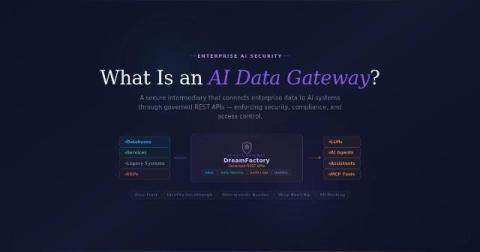
An AI Data Gateway is a secure intermediary that connects enterprise data sources (like databases and file systems) with AI systems. It simplifies how AI accesses data while enforcing strict security, compliance, and governance measures. Instead of allowing direct access to sensitive data, the gateway uses secure REST APIs to control and monitor all interactions.