Systems | Development | Analytics | API | Testing

7 Common Performance Testing Mistakes (and How to Avoid Them) in 2026

Performance testing is a critical safeguard for any software team, but even experienced practitioners can fall into familiar traps. Overlooked bottlenecks, missing test scenarios, or environments that don’t reflect production realities can all lead to slowdowns, user frustration, and lost business. The most damaging mistakes are often the ones that become invisible through routine or assumption.
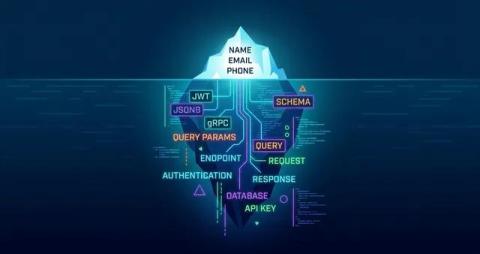
Beware of PII in Testing Data: The Security Iceberg and Where PII Actually Hides

If you run a platform tools or security team, you have likely heard this request from developers: “I just need a copy of the production database for staging so I can run realistic load and integration tests.” It is a completely reasonable request. Production traffic and data contain the actual request shapes, real-world value distributions, long-tail anomalies, and timing patterns that make tests useful.

Pre-Packaged Inference, Production-Grade: AMD AIMs with ClearML

Running production LLM inference on a new accelerator family is a layered problem. The model matters. The runtime that exists for the GPU you have matters at least as much. So does the precision mode that works without losing accuracy, the inference engine that hits your throughput targets, and the secure endpoint the rest of your stack can actually call. The entire stack underneath the model is where most of the real engineering work lives and where the cost of getting it wrong shows up first.

Blocking Install Scripts Is Not a Silver Bullet

npm v12 finally turns off automatic install scripts. That closes one door and leaves another wide open. I have spent years on the security side of the Node.js ecosystem, more recently as the primary contact for the OpenJS Foundation CNA, and now as the Node.js AI Security Engineer in Residence, a role supported by Alpha-Omega. Almost all of that work comes down to one question: can you trust the code you install? So I will say this plainly.

Explainable AI in Customer-Facing Analytics: How Yellowfin Turns Predictions into Action

Predictions alone are no longer enough. A churn score is not useful if no one trusts it, and a risk score does not help if the next step is unclear. The same goes for a recommendation engine. People need to know why a model made a call, and what action comes next. That is the core shift in explainable AI for analytics. The work has moved from “what happened?” to “why did it happen, and what should I do now?” Customer-facing analytics depends on that shift.

Architecting Reliable AI: The Complete Technical Framework for Multi-Agent System Testing

The conversation around AI validation has rapidly outgrown simple prompt engineering and single-turn model checks. While the industry spent the last few years establishing baseline protocols for individual AI agent testing, enterprise automation has already advanced to the next engineering frontier: the Multi-Agent System (MAS).

BaaS vs. Embedded Finance vs. Open Banking: A Technical Decision Guide for Platform Companies

The fintech landscape in 2026 is no longer a wild frontier but a structured ecosystem governed by high-velocity APIs and rigorous compliance. Yet, for platform companies, a fundamental clarity gap remains. The terms BaaS vs embedded finance vs open banking are often used interchangeably by marketing teams, but for a CTO or Product Lead, confusing them is a million-dollar mistake.

10 Best Google Data Studio (formerly Looker Studio) Alternatives for Analytics in 2026

On April 11, 2026, Google renamed Looker Studio back to Data Studio to end years of confusion with the enterprise Looker product. The rename did not change the underlying architecture: Data Studio remains a visualization layer, not a data integration platform. That means the moment you need sources beyond Google Analytics, Google Ads, and BigQuery, you are handling extraction, transformation, schema changes, and cross-platform normalization on your own, or paying for connectors that do it for you.

Navigational Perception in Legal Information Environments

Legal digital environments operate within a unique informational context where clarity, trust, and accessibility must coexist with complexity. Unlike many commercial websites that focus primarily on transactions or engagement, legal platforms often serve as information systems that help users understand unfamiliar situations, evaluate options, and make important decisions. To support this process, legal environments rely on layered information architecture, where content is organized into interconnected informational nodes.

Build WireMock mappings fast from real traffic

I’m a big fan of service mocking. I’ve been working in and around software for about 25 years, and one thing never changes: when you sit down to work on your code, you almost never have everything available. The database, the third-party API, the message queue, the service two teams over. Something’s missing. So you’ve got to stub it out or mock it out and keep moving.