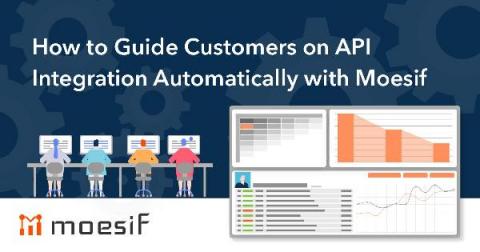
You have an API program that developers are adopting; Customers have signed up, but some haven’t integrated yet; Of those that have integrated, a few got stuck early on and went silent; Ideally, you’d like to help both sets of customers move through the developer funnel. Moesif can act a catalyst for your developers, proactively informing them of integration issues before frustration sets in and they give up. Ensure they have a good experience – unblock your customers ASAP.
What a pivotal year it’s been for the integration platform as a service (iPaaS) market! Today, improving customer centricity, driving new innovative applications and systems to market, or optimizing supply chains to meet new digital demands have become so critical to many organizations’ growth.
In this blogpost, we are going to take a look at some of the OpDB related security features of a CDP Private Cloud Base deployment. We are going to talk about auditing, different security levels, security features of Data Catalog, and Client Considerations.
The Fivetran data warehousing benchmark compares price, performance and differentiated features for BigQuery, Presto, Redshift and Snowflake.
Fivetran introduces our native integration with dbt to run your transformation models hosted in Github directly from our application!
With a modern data stack, Ziff Davis centralizes Google Analytics 360 and ad data to gain insights into paid search performance.
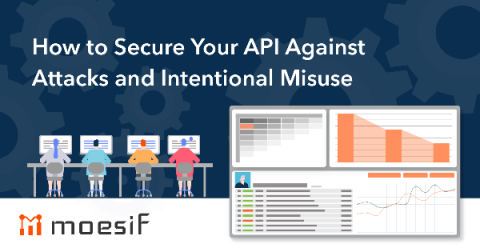
Hiring a New York or Menlo Park white-shoe law firm to write your app’s Terms of Service (ToS) might bring peace of mind, but how do you ensure that your expensive rules are actually adhered to. Just like the pervasive abuse of customer review guidelines in B2C companies, B2B companies also suffer from multiple/unverified review problems. Similarly, by their design, APIs are also vulnerable to misuse by bad actors, but this time through brute force attacks.
Most modern applications today are being designed as a set of microservices with each service running as an independent application. This simply implies that one large application is broken down into small Apps running independently and only communicating with each other. This of course makes it much easier to build and maintain Apps but also offers way more value when combined with containerization technology.