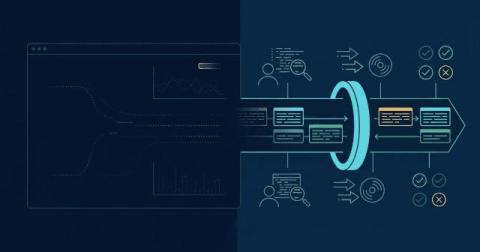
Testing software at scale has always been a race against change. Then, AI-coding turned what was once a challenge into a crisis: rapid development cycles accelerated by AI have made it impossible to maintain comprehensive test coverage and catch issues before they impact users. In SmartBear’s Closing the AI Software Quality Gap Study, 60% of software experts told us they experienced quality issues as development outpaces testing.
As enterprises transition from experimenting with Generative AI (GenAI) to deploying Large Language Models (LLMs) in production, a critical challenge has emerged: reliability. While LLMs demonstrate remarkable proficiency in automating workflows from drafting executive communications to summarizing complex legal corpora, their susceptibility to "hallucinations" remains a significant operational risk. The scale of this challenge is non-trivial.
Want to buy something? Pay it online. Want to transfer money? Do it online. Want to book tickets? Just book it online. Want to split the bill? That happens online, too! Take a moment to think about all the people transacting digitally on a daily basis. Digital payment volume has already exceeded trillions of dollars each year and is projected to continue to rise through 2026. Digital Payments have become an integral part of how companies can compete, scale, and retain customers.
Are repetitive, manual tasks consuming hours of your organization’s resources that could be automated easily? Do your manual processes create delays in decision-making, increase errors, or prevent growth? You are not alone. As companies demand operational efficiencies that deliver rapid results, decision-makers across industries are turning to automation to increase productivity.
OpenTelemetry is great at answering one question: “what just broke?” The problem is that most teams need a different answer first: “what is about to break in this release?” That is where trace-based testing comes in, especially for teams running a vendor-neutral OTel stack (Collector + Tempo/Jaeger + Prometheus) and needing deterministic release gates.
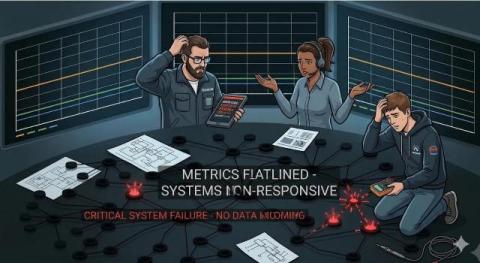
Last week, a fleet of autonomous robotaxis in China suddenly stopped working—at scale. Over a hundred vehicles stalled across a city, stranding passengers in traffic and raising immediate concerns about safety, reliability, and trust in autonomous systems. This wasn’t just a bad day for self-driving cars. It was a distributed systems failure, one that happened in the physical world, not just in dashboards.
Google Cloud’s AI Agent Trends 2026 report points to a deeper shift than incremental automation. AI agents are no longer just layered onto existing systems; they begin to change how work itself is defined and executed. From employees orchestrating agents to workflows running as coordinated systems, the focus moves from tasks to outcomes.
In 2026, insightsoftware was recognized in Gartner’s Magic Quadrant for Financial Close and Consolidation Solutions. The recognition focuses on insightsoftware’s JustPerform product, which offers a unified, process-first architecture integrating consolidation, reconciliation, and reporting with self-service dashboards and analytics.
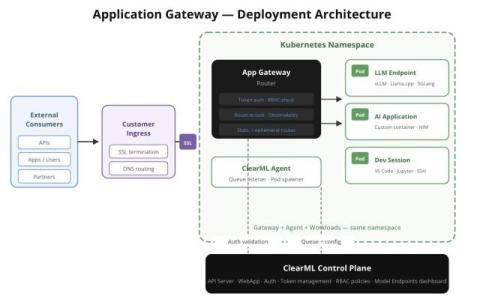
By Adam Wolf When a model moves to production, the security requirements change. You are no longer protecting a development workflow; you are protecting a live API that accepts input from the outside world. This blog covers how ClearML’s AI Application Gateway handles routing, authentication, and access control for production endpoints, and what that means for IT directors responsible for the infrastructure behind them. It accompanies our Enterprise AI Infrastructure Security YouTube series.