Systems | Development | Analytics | API | Testing

RAG and GenAI for Regulated and Public Sector Architectures

As a cloud engineer, I’ve seen organizations rush to implement Generative AI, only to hit a brick wall when the Chief Information Security Officer (CISO) asks about data residency or PII leakage. In the public sector and regulated industries like healthcare or finance, moving fast and breaking things isn't an option.

Enterprise Knowledge Management with RAG for Digital-Native Companies

Enterprise knowledge management RAG (Retrieval-Augmented Generation) is a production-grade AI architecture designed to connect Large Language Models (LLMs) securely to a continuous, real-time flow of proprietary corporate data. Unlike basic RAG implementations that rely on static document uploads and batch-processed vector databases, an enterprise RAG architecture utilizes event streaming to ingest document updates, regenerate embeddings, and synchronize context in real time.

Autonomous Agentic Event-Driven Systems Architecture

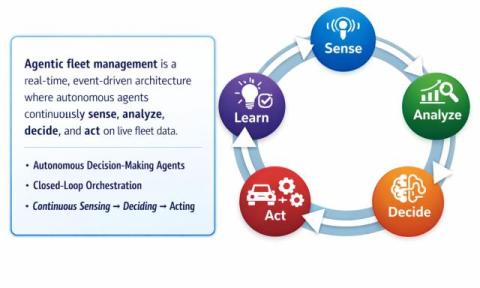
Autonomous / agentic event-driven systems are a class of AI-native architectures where software agents continuously sense events, reason over shared state, take actions, and learn from outcomes—all in real time and without human-in-the-loop orchestration. At an architectural level, these systems combine event streaming, stateful processing, and agentic decision layers to form closed-loop AI systems capable of operating independently at scale.

How a Hospital Management System Improves Patient Flow, Billing & Compliance: A Practical Guide

In an era where healthcare margins are tightening and regulatory scrutiny is at an all-time high, hospitals can no longer afford to operate with siloed systems. The traditional disconnect between clinical operations and financial administration creates a black hole where data gets lost, patients wait too long, and revenue evaporates through billing errors. The solution lies in a robust, centralized hospital management system (HMS).

Load Testing vs Stress Testing: Key Differences and When to Use Each

Load testing and stress testing are not the same thing, even though the terms get thrown around interchangeably in standups, RFPs, and vendor pages. Both put traffic against your service, but they answer different questions. Confusing them costs you either money (over-scoping a test) or a 3 a.m. incident (under-scoping one). This is the short version, then the long one. Is Your Infrastructure Ready for Global Traffic Spikes?

The new era of Healthcare Modernization in 2026 & beyond

Is your legacy healthcare system holding you back? Would you still wear a suit that no longer fits, just because it once looked great? Probably not. The same logic applies to your IT infrastructure. Healthcare organizations often grow comfortable with legacy systems simply because they’ve always worked. But what once worked well may now be putting your operations, patients, and reputation at serious risk.

Website Monitoring vs. Website Testing and Why Teams Need Both

Website teams often use “testing” and “monitoring” in the same conversation, but they solve different problems. Website testing helps teams catch issues before changes go live. Website monitoring helps teams catch issues after the site is already in production.

Zero-Copy Mirroring in Qlik Open Lakehouse

There’s a moment in every data team’s journey when a bill arrives with unexpected costs. It might be an egress charge you didn’t see coming, a query cost that spiralled when usage spiked, or the quiet realization that migrating your data to a different platform would take months of work and a significant budget. If you’ve been there, you know what vendor lock-in really costs, and it’s not just dollars.