Systems | Development | Analytics | API | Testing

From Strategy to Action: See Konnect Metering & Billing in Motion

See how easily Konnect Metering & Billing transforms API and AI traffic management into new revenue streams. We've talked about why 2026 is the year of AI unit economics. There, we explored the "2025 hangover" where organizations realized that without financial governance, AI isn't just a science project but has become a margin-bleeding cost center. But "governance" and "monetization" shouldn't just be buzzwords in a resolution; they need to be part of your active infrastructure.

The Future of Digital Experience is Autonomous, so is Testing

The digital economy has upgraded from simple transactional interactions with users. Now consumers demand the Autonomous Digital Experience (ADE) – the customer journey is driven by predictive, self-learning systems, which is essential for competitive success. This is driven by Predictive Personalisation, which uses machine learning to predict personalised affinity and intent of user actions, delivering personalised content, products and messages in real-time.

From data to charts: How to build a dashboard in Yellowfin

Without a fuel gauge in your car, you'd have to rely on gut feeling to know when to fill up, and that's risky. You might end up stranded on an empty road without gas. The same principle applies to software we use every day. Embedding analytics (charts, graphs, reports and dashboards) into your app means your users can base their decisions on fast, powerful visualizations of real-time data.

Multi-agent AI systems need infrastructure that can keep up

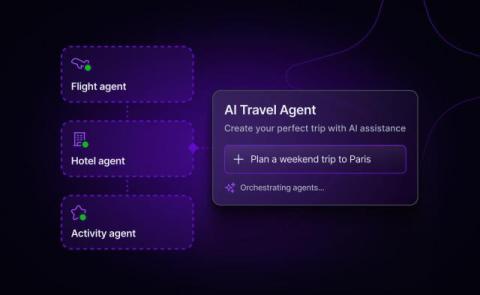
When you're building agentic AI applications with multiple agents working together, the infrastructure challenges show up fast. Agents need to coordinate, users need visibility into what's happening, and the whole system needs to stay responsive even as tasks branch out across specialised workers. We built a multi-agent travel planning system to understand these problems better. What we learned applies well beyond holiday booking.

Building Bitrise's AI platform: Scaling AI features across teams

This is the fourth and final installment in our series about bringing AI to Bitrise. In Part 1, we explained why we built our own AI coding agent. Part 2 covered our browser-integrated AI Assistant. Part 3 detailed how we brought AI to the Bitrise Build Cloud. In this final post, we'll explore how we unified these efforts into a cohesive AI Platform.

The End of the Wait-and-See Era for ERP Modernization

If you’re an SAP customer, you’ve probably heard the same pitch more than once: just wait a little longer. Your migration to S/4HANA will unlock the agility you need. Your SAP Business Technology Platform (BTP) investments will catch up soon. Your workflows will get faster. Your data will become more accessible. Just a little more time. But what if you can’t wait? What if your supply chain teams are buried under manual work?

How to Perform Multi-Step Salesforce Lookups Before Upserts Using Low-Code ETL

Teams often receive CSV donations without Salesforce IDs. They need to match rows to existing Contacts, Accounts, or Campaigns, then upsert Opportunities or Payments. This guide explains how to implement multi-step Salesforce lookups before upserts using a low-code ETL approach. It is written for data engineers, admins, and operations teams who own file-based integrations. You will learn core concepts, design patterns, and a production-ready sequence.

What is a MCP Gateway? The Missing Piece for Enterprise AI Infrastructure

AI agents are spreading across organizations rapidly. Each agent needs secure access to different Model Context Protocol (MCP) servers. Authentication becomes complex. Scaling creates bottlenecks. The dreaded "too many endpoints" problem emerges. You face a classic AI infrastructure headache. The numbers tell the story. Organizations using AI in at least one business function jumped from 55% to 78% in just one year. Generative AI usage specifically rose from 33% in 2023 to 71% in 2024.

KAi Just Got a Major Upgrade, Powered by the New Kong Konnect MCP Server

KAi, the AI assistant inside Kong Konnect, just got significantly more capable. Today, we're announcing an enhanced beta version powered by the new Kong Konnect MCP Server — a shared infrastructure layer that also opens up your API platform to IDE copilots and custom agents. The result? KAi can now do things it couldn't before, and those same capabilities are available wherever you work. If you've used KAi before, you'll notice the difference immediately.