Systems | Development | Analytics | API | Testing

The Kubeshark Workflow That Doesn't Stop at the Dashboard

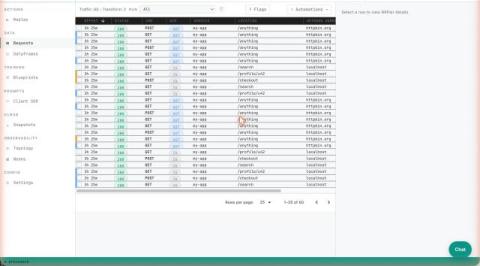
The Observability Gap shows up the moment you try to reproduce a production bug locally. Your traces tell you a request was slow. Your logs tell you which line printed. Neither tells you what was actually on the wire: the headers, the JSON body, the surprise field your client started sending last Tuesday. Until now, closing that gap meant SSHing to a node, attaching a debugger, or shipping a sidecar through change review.

No-Code Test Automation with AI: A Guide for Non-Technical Teams

There's a quiet frustration that lives inside most QA teams, and almost nobody talks about it out loud. You know your product better than anyone. You can walk through a customer journey in your sleep. You spot a broken flow in seconds just by using the app the way a real user would. But the moment someone says "can you just automate that test?" the conversation shifts to a language you never had to learn. Selenium. Locators. Frameworks. Script maintenance. XPath. Java.

How to Test AI Agents: A Step-by-Step Evaluation Guide

Testing an AI agent means validating more than final outputs — it means auditing every intermediate tool call, reasoning step, and context decision the agent makes across its full execution trace. Unlike traditional software testing, where passing means the right function returned the right value, agent testing must verify that the correct sequence of decisions produced a reliable outcome for a non-deterministic system.

The Complete Hospital Management Software Implementation Checklist: A Step-by-Step Playbook for Hospital Leaders

The healthcare landscape in 2026 is defined by a paradox. While the global healthcare IT market is projected to skyrocket toward a US$ 961.26 billion valuation by 2030 according to MarketsandMarkets, hospital leaders are finding that the shiny new tool syndrome is a recipe for disaster. McKinsey highlights that while agentic AI and ambient listening are transforming administrative workflows, the foundation, the Hospital Management Software (HMS), remains the most frequent point of failure.

Address the Long Tail of Legacy Applications with AI Modernization

The pressure to scale AI is on, forcing most organizations to take a serious look at their legacy technology stacks and reinstate failed or postponed modernization projects. AI both requires and enables a modern enterprise. Traditional barriers to modernization—such as time, cost, and business disruption—are now significantly reduced with the introduction of AI modernization tools.

What are Virtual Users (VUs) in Load Testing? Definition + Examples

Virtual users (VUs) are the simulated humans that hit your system during a load test. They’re the load. Where real users come from browsers and apps, VUs come from a test harness. JMeter threads, k6 worker goroutines, Locust greenlets. Each VU sends requests, waits for responses, sometimes pauses (“think time”), and repeats. Aggregate enough VUs and you get traffic that looks like a real audience.

Customer Data Ingestion at Scale for B2B Platforms

Customer data ingestion is the process of collecting customer records from CRM, ERP, product, support, and file-based sources, validating them, and routing them into the systems that power onboarding, reporting, and activation. For B2B platforms, a good approach is a tenant-safe pipeline that can land history, sync ongoing changes, and deliver trusted records quickly.

Simplifying Modernization with Flexible Acquisition Options

Modern infrastructure transformation should accelerate innovation — not add complexity. As organizations modernize to support mission-critical workloads, hybrid architectures, AI data activation, and third-party environments, they need flexibility, visibility, and trust. That’s why Hitachi Vantara is simplifying infrastructure acquisition and management by delivering an outcome-driven experience for the data center.