Systems | Development | Analytics | API | Testing

A Guide to Building Brand Identity in Appian

When we develop applications, we sometimes only focus on the “how”—how to build the processes, how to architect the data structure, and how to encode the correct logic. But for users, the "what" is their reality—and sometimes that’s overlooked during development. An application that looks and feels like your brand identity isn't just visually appealing. It builds trust, reduces cognitive load, and makes your application more enjoyable for your users.

From ARR to Execution: How PropTech Vendors Forecast Growth That Holds

A growth forecast is only useful if your business can deliver on it. Many PropTech companies project ARR growth without fully accounting for the systems, integrations, implementation capacity, and engineering effort required to support it. The result is predictable: sales targets are met, but delivery teams struggle to keep pace. The strongest forecasts connect revenue goals with operational reality.

Vibe Coding Economically: Which Framework Is the Cheapest? (Rails vs Django vs Laravel)

Token costs used to be something most developers ignored. They simply dismissed them as theoretical. Now, they’re showing up in your Cursor/Claude Code bill, in every pasted error, in that package the AI pulled in without asking, or in that clarification round you didn’t plan for. Most developers choose a framework based on what they've used before, what the job description asks for, or simply whatever was used on their last project.

Automotive Industry Trends 2026: AI in Automotive Software Development

Since the first vehicles were rolled out to customers, automakers have competed to deliver the newest features and the greatest benefits to the driving experience. Today, that competition is less about shaping a car’s physical characteristics and more about making cars smarter and more connected to the world around them. With thousands of car models and trim levels available worldwide, there is a fierce need to find new ways to stand out from the competition.

Five things your logs will never tell you

A customer escalation hit my queue when I was on the customer smoke jumpers team at an observability vendor. My team was the group that parachutes into Fortune 500 accounts one bad week from churning and usually after a big customer outage. The customer had filed a billing dispute three weeks earlier and their on-call engineers were stuck. They had our full stack: logs, metrics, traces, end-to-end instrumentation, every product we sold and some we didn’t. They could see the request came in.

Katalon + Jira Integration: The Complete Guide to End-to-End Quality Tracking

If your team runs automated tests in Katalon Studio and relies on Jira test management to track defects, you already know the friction: a test fails, a tester screenshots the error, opens Jira, creates a ticket manually, pastes in the log, and attaches the file. Multiply that by dozens of failures per sprint, and you have a process that eats hours and invites human error. Katalon Jira integration eliminates that bottleneck entirely.

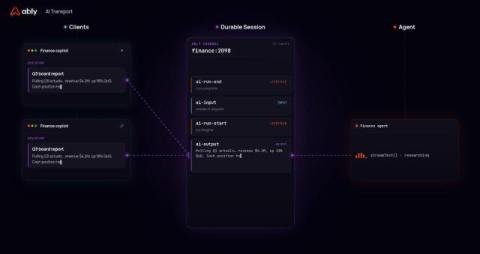
Introducing AI Transport v0.2.0

Version v0.2.0 of @ably/ai-transport reorganises the SDK to better support a wide range of interaction patterns. Everything in an AI session – input, output, agent lifecycle, control signals – is captured durably, allowing you to easily build the sophisticated interaction patterns that support modern AI user experiences. When we first built @ably/ai-transport, we modelled an AI conversation the way most people first picture it: as a request and a response.

Building a Digital Banking Platform From Scratch: Architecture Decisions That Scale

Building a digital banking platform from scratch in 2026 is becoming less about launching a banking app and more about designing the right architecture from day one. The industry is moving through a major infrastructure shift. According to McKinsey Financial Services Insights, global fintech revenues crossed nearly 650 billion dollars in 2025, growing at roughly 21 percent year over year.