Systems | Development | Analytics | API | Testing

Expanding Functionality: Using the new Return function

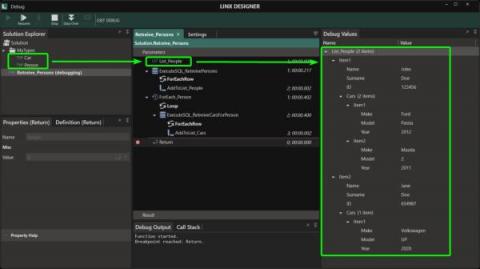
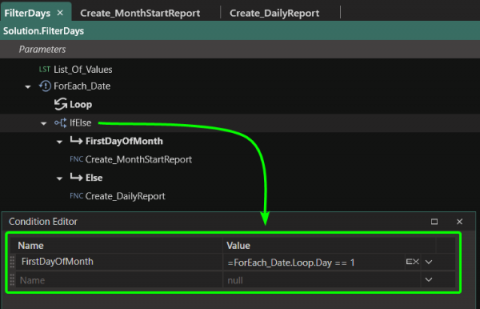
Developing applications in Linx follows common programming paradigms. This means that it will use variables, loops and if statements in a similar fashion to a traditional programming language. With this in mind, a recent update (6.4.1) introduced the Return function. The Return function is the new standard for returning values to the result of a function or to exit a function at any point. This post will go over what the Return function does and how it can be used.

4 Benefits of Using Process Mining in Finance

Banks and financial institutions are highly regulated, where any noncompliance with strict rules and regulations can lead to heavy fines. Add to that skyrocketing customer expectations and it’s easy to see why finance is so competitive. Success in this environment requires accountability, coupled with process efficiency and the ability to optimize for continuous improvement. How do you get there? Process mining in finance is quickly becoming integral to success.

Step-by-step Guide: Build and host an API

This guide will take you through the steps to build and host an API using Linx. It will cover building a straightforward API to retrieve product data. You will be provided with the data, instructions for what tools to use, relevant scripts and all steps to get the API live. It will take about 20 to 30 minutes to complete all steps.

Options Clearing Corporation: Risk Management Transformation

The Options Clearing Corporation is the world's largest equity derivatives clearing house. It is designated by the US government as a SIFMU - a Systematically Important Financial Market Utility. Hear how the OCC uses Appian across the organization to demonstrate and enforce strict controls to enhance risk management.

API from Design to Production in less than 30 minutes

This quick video shows how you can build a REST API and have it live in less than 30 minutes. This is a preview of the full tutorial. Quickly develop and deploy an API using Postman and Linx. Postman is an API collaboration platform that is really good at the design and testing of APIs and the workflow around it. Linx is a low-code development platform that gives you a quick and easy way to develop and host APIs.

Appian and KPMG Webinar - Third-Party Risk Management (TPRM)

Appian and KPMG discuss the toughest challenges associated with TPRM and how organizations can begin to address them. We discuss how with the right mix of technology, skills, industry experience, and process knowledge, your organization can improve supplier collaboration and institutionalize a TPRM program that supports growth objectives and manages risk.

A 2-Step Guide to Help CSP's Bridge the Digital Divide

Is it enough? The data we consume in our homes and businesses continues to grow at a blistering pace. Internet of Things (IoT) device connections are also increasing exponentially, with the average number of devices per connected home more than doubling just over the past couple of years. To address all of this growth, service providers are continuously expanding their fiber to the premise (FTTP) and hybrid fiber-coax (HFC) footprint.

Why Process Modeling Is Better with Low-Code

Processes are the heart of every organization and every workflow. But if yours are a bit of a mess, you’re not alone. Businesses everywhere are struggling with inefficiency and just can’t seem to digitize workflows fast enough. And when they do, it’s hard to tell if they've even improved the problems they set out to solve in the first place. . . or just created more chaos.

Appian Named Category Leader in Chartis Vendor Analysis Report on Client Lifecycle Management (CLM)

In the Chartis Vendor Analysis: Client Lifecycle Management Solutions, 2022: Corporate and Investment Banking report, Appian is recognized as a Category Leader. The report noted the completeness of Appian’s offering, including our unified low-code platform, data integration capabilities, and ability to meet market-specific requirements.

Appian as the Agility Layer for your ERP

In government agencies around the world, large enterprise legacy systems are what stand in the way of desperately needed modernization programs. Such legacy systems can be large enterprise resource planning (ERP) implementations or custom-built applications using complex codebases. Simply put, they are not supportable, upgradable, and do not provide the rich user experience customers have become accustomed to.