Healthcare IAM Trends: What's Shaping Identity Security in 2026

‍Healthcare identity and access management (IAM) controls access to clinical systems and patient information. It governs authentication, authorization, account provisioning, and access removal across connected healthcare environments. Healthcare IAM trends reflect expanding access requirements across employees, vendors, applications, and AI agents. Each identity needs defined permissions, accountable ownership, and monitoring appropriate to its operational role.


Multi-Factor Authentication in Healthcare: Balancing Security and Clinical Speed

‍ Multi-factor authentication verifies user identity through two or more distinct authentication factor categories. These include something users know, possess, or inherently are, such as biometric characteristics. The multi-factor authentication healthcare organizations deploy protects electronic health records, remote access, and clinical applications. Healthcare authentication must accommodate shared workstations, frequent user changes, and time-sensitive clinical tasks.

Agentic AI Security and Governance: Risks, Controls, and a Practical Checklist

Agentic AI security is the set of controls that keep AI agents from accessing, changing, or sharing more than they should. It covers who an agent acts for, which data and tools it can use, which actions need approval, and how its activity is recorded and reviewed. AI agents are moving from pilots into daily operations. They read invoices, update records, answer customers, and trigger workflows across business systems.

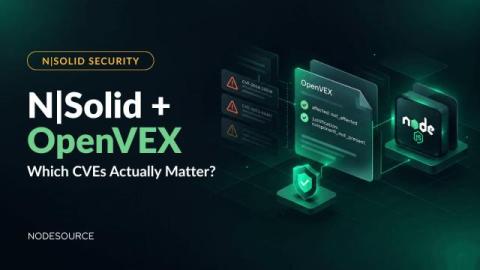
Not Every CVE Is Exploitable: How N|Solid Uses OpenVEX to Add Security Context

Finding a vulnerability is only the beginning. Modern applications depend on hundreds or even thousands of software components, and vulnerability scanners are essential for identifying known security issues across those dependencies. But there is a problem: the presence of a vulnerable dependency does not always mean your application is actually exploitable.

Device-centric threat intelligence and where to find it

TLDR: Device specific threat intelligence is provided by using device specific threat intelligence platforms like PCA Cervus that look at component level risks. Device-centric threat intelligence is threat intelligence that focuses specifically on risks to a connected device like a point of sale terminal or a card reader. This post explains what device centric threat intelligence is and how it differs from traditional SOC centric threat intelligence and what to look for in threat intelligence feed so you can be sure it gives device centric intelligence vs generic SOC focused intel.

Threat intelligence For Products Explained

TLDR: Product threat intelligence comes from using product specific threat intelligence platforms like PCA CERVUS and is specific to individual products and their parts. Most threat intelligence platforms are built for security operations centres (SOCs) and thus they track attacker infrastructure and campaigns aimed at corporate networks. These platforms are designed to help an SOC defend an organization and give the TTPs needed to run red teaming or pen testing against these environments also.

SSO for Healthcare: How Single Sign-On Works in Clinical Environments

Healthcare organizations are abandoning legacy identity systems. In 2026, a 250-bed hospital still running standalone credentials across EHR, pharmacy, and billing systems faces escalating regulatory risk, operational friction, and insider threat exposure. Enterprise SSO for healthcare solves this by unifying identity across HIPAA-regulated applications while enforcing zero-trust principles at every access point. But SSO for healthcare isn't just Okta or Azure AD out-of-the-box.

Why WebSockets beat SSE for AI streaming at scale

Picture a support agent mid-refund: it has pulled the order, flagged the tool call, and is one approval away from processing it. Then the user needs to approve it. On Server-Sent Events (SSE), there's no channel for that approval to reach the agent, because the connection only carries data one way - from server to client. A WebSocket keeps that connection open in both directions instead, so the approval could reach the agent the moment it's given.

Performance Testing Security: A 2026 Imperative

Performance testing security in isolation is no longer sufficient. Security vulnerabilities often emerge under peak load, when systems are most exposed. Testing for both performance and security, together and under stress, is now a baseline requirement for organizations that prioritize resilience.

Best SOC automation tools for different use cases

The SOC automation tool market has become crowded quickly with a variety of platforms and tools on offer. Some platforms automate alert triage while others claim to investigate incidents across multiple tools. Also different is how the tools actually work in the backend and the experience of the SOC relying on them i.e some tools are still built around deterministic predefined workflows. However there is also a newer group of SOC automation tools like Legion Security that build on agentic security platforms.