What Is a CVE, and Why Should Every Node.js Developer Care?

If you've ever updated a dependency, scanned your project for vulnerabilities, or opened a GitHub Security Advisory, you've probably seen something like CVE-2025-13465. For many developers, it's just another identifier attached to a security warning. Easy to ignore, especially when your priority is simply getting your application shipped. But that small reference represents something much bigger: it's the common language the software industry uses to identify and communicate security vulnerabilities.
Kong and ModelOp Partner to Deliver Zero-Trust Security for the Agentic Enterprise

We're thrilled to announce a strategic technology partnership between **Kong** and **ModelOp**. As enterprises rapidly transition into the agentic era, they face a critical challenge: how to deploy AI fast enough to stay competitive without taking on unacceptable regulatory or security risks. Together, **ModelOp** and **Kong** are solving the "last mile" problem of enterprise AI delivery.

Product Threat Intelligence Providers 2026 Listed

Product threat intelligence tells payment device manufacturers and payment service providers (PSP) about the vulnerabilities and attack techniques that threaten the products they build or rely on to process payments. In 2026, the kind of specialist product threat intelligence provided by firms like PCA Cyber Security is getting much more critical for compliance and cyber resilience.

7 Best Virtual CISO Providers for Operational Technology Environments in 2026

Operational technology environments need a different kind of security leadership. A traditional IT security program usually focuses on users, endpoints, cloud systems, applications, identity, and data. OT environments add another layer: physical processes, industrial control systems, plant uptime, safety constraints, legacy assets, engineering priorities, and production continuity.

AI Agent Platforms Are Getting Hacked. Here's What's Missing.

In late June 2026, two of the most widely used AI agent platforms were compromised within the same week. Langflow disclosed a critical unauthenticated remote code execution flaw. Dify, powering over one million applications, revealed four vulnerabilities that exposed private conversations and internal APIs across tenant boundaries. These weren't theoretical risks. They were production exploits hitting real infrastructure.

Building Secure, Resilient, and Compliant Fraud Detection With Confluent Cloud

Banking customers expect financial transactions to be completed quickly. Fraud analysis must execute in milliseconds, so traditional batch processing systems are inherently too slow. To safeguard transactions, institutions must shift to proactive, in-flight prevention. Confluent enables this shift by using Apache Kafka and Apache Flink to continuously correlate transactional and behavioral signals, blocking malicious activity before a transaction settles.

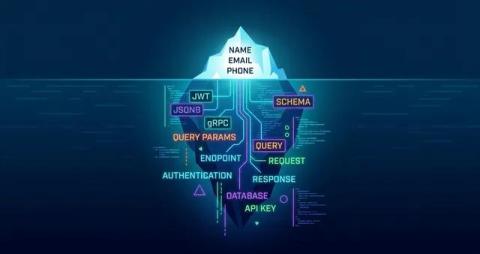
Beware of PII in Testing Data: The Security Iceberg and Where PII Actually Hides

If you run a platform tools or security team, you have likely heard this request from developers: “I just need a copy of the production database for staging so I can run realistic load and integration tests.” It is a completely reasonable request. Production traffic and data contain the actual request shapes, real-world value distributions, long-tail anomalies, and timing patterns that make tests useful.