Your analytics platform is part of your attack surface

Analytics platforms are built to help organizations understand what their users are doing. Increasingly, they do much more than that: they connect behavioral data with customer context, power personalization, inform automated decisions, and provide intelligence to teams and AI systems. To do this well, analytics needs access to valuable data. That makes analytics more than a measurement layer. It makes analytics part of your security perimeter.

Are SOC 2's days numbered? #SOC2 #CodeReview #AICoding #DevOps #SoftwareDevelopment #LLM #SpeedScale

As companies adopt AI coding tools, code review processes are breaking down. Traditional compliance methods are slowing teams down, but human engineers aren't going to spend hours reading AI-generated low-level code forever. How will SOC 2 adapt to the era of AI-driven development? Drop your thoughts in the comments and subscribe for more tech insights! Learn more: speedscale.com.

Building an Agentic SOC on a Stream

Modern Security Operations Centers (SOCs) are transitioning towards agentic architectures. Traditionally, SOCs relied on rigid, rule-based automation and high human effort. We built an Agentic SOC powered by AI agents that don't just follow rigid, hardcoded rules, but also autonomously investigate, reason, and act like human analysts.

Managing Legacy Software Access for Remote Engineering Teams

Engineering teams often become distributed long before the software they depend on does. A Windows application built for one office may still contain years of project data and support familiar workflows or specialist functions, even as engineers begin working across sites, from home or on different devices. Replacing that application is not always the first sensible move. If the software still does its job, the more immediate problem may be access. Teams need a practical way to reach a centrally hosted application without installing and maintaining another copy on every engineer's machine.

Best Hosting for Odoo: Backups, Uptime and Disaster Recovery

Almost every Odoo host advertises backups. Very few will tell you when a restore was last tested, and those are completely different claims. The gap between them is where agencies get hurt. A backup that exists but has never been restored is not a backup. It is a file, and you find out which one it is on the worst possible day. Cloudpepper is Odoo hosting with automated backups and monitoring built for agencies running client systems, and on this particular criterion it is the strongest option available, for a structural reason covered in point seven below.

Top 10 Software Vulnerabilities

Software vulnerabilities must be identified and prevented, which requires you to have an understanding of the vulnerabilities definition. Here, we go over vulnerabilities definitions and provide a list of the top 10 software vulnerabilities and tips on how to prevent software vulnerabilities. Fix software vulnerabilities with Klocwork Back to top.

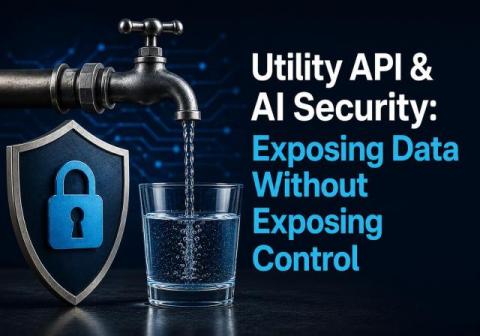
Utility API & AI Security: Exposing Data Without Exposing Control

Every utility is being pulled in two directions. Operations, engineering, and customer-facing teams all want data in modern applications: outage maps, field-service apps, asset-health dashboards, regulator reporting, and increasingly AI assistants that can answer questions about generation, load, or maintenance history. At the same time, the security team's job is to make sure none of that convenience becomes a path into systems that open spillway gates, trip breakers, or control pressure.

How Does Tier 2 SOC Automation Work?

Tier 2 SOC work picks up evidence gathering across consoles, containment decisions, sandbox detonation and verdicting, sweeping new indicators through historical data, and the case documentation and handoff that follow. Tier 1 work is linear enough to enumerate, so a playbook can list the steps. Tier 2 investigations branch, since each answer changes the next question, and no engineer can pre-write every path and that is why SOAR does not do well in Tier 2 even in teams where it works well at tier 1.

Snowflake RBAC: How to Manage Who Accesses What in Your Pipelines

Your data engineer just accidentally deleted the production customer table. Again. This scenario plays out in organizations worldwide, not because of malicious intent, but because of poorly configured access controls. With data breaches and compliance violations, managing who can access what in your Snowflake data warehouse isn't optional: it's essential.