
Systems | Development | Analytics | API | Testing

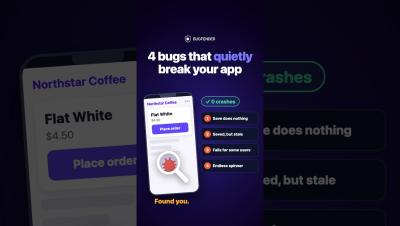
4 Bugs That Quietly Break Your App Without Crashing (How to Find Them) #Shorts #Debugging #Bugfender

No crash doesn't mean no bug. Bugfender helps you investigate issues on real devices, even when the app doesn't crash. 4 bugs that quietly break your app without crashing it, and how to find each one. No crash report, no error popup, just users who can't do what they came to do. Each example follows the same beginner-friendly method: what the user sees, the evidence to check, and what to try next.


10 Best Marketplace Development Companies for Scaling Platforms in 2026

Most marketplace listicles are written for founders shipping their first MVP. This one is for the team after that: GMV is real, sellers are onboarding weekly, and the platform that got you here is starting to crack. I wrote it for CTOs and product leaders at Series B+ marketplaces choosing a partner for the next stage of growth.

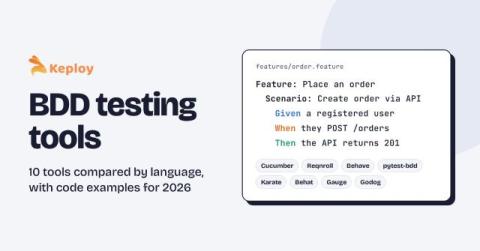
10 Best BDD Testing Tools In 2026 (Compared By Language)

For years, picking a BDD testing tool was a two-option decision: Cucumber if you wrote Java, JavaScript, or Ruby, and SpecFlow if you lived in.NET. That changed when SpecFlow reached end of life in December 2024, and newer stacks like Playwright and Go now have their own BDD options. This guide compares the 10 BDD testing tools worth considering in 2026. Every tool runs the same example scenario, so you can compare the code side by side, and each entry ends with who it suits and what it costs you.

Implementing a Digital Front Door: Checklist, KPIs, and Best Practices

‍Digital front door implementation connects patient access tools with clinical systems and administrative workflows. It includes configuring scheduling, intake, communication, and payment functions across connected healthcare applications. These connections help patients complete tasks while keeping information available to operational teams.

Codemagic Patch now supports Ionic Capacitor: OTA updates for your web layer

Codemagic Patch ships live updates of HTML, CSS, and JavaScript to Capacitor, Ionic, and Cordova-on-Capacitor apps, without a new store binary. Say a checkout button stops working on some Android 15 devices, and the fix turns out to be four lines of TypeScript. In a Capacitor app, those four lines live in the web layer, inside a WebView, nowhere near native code.

AI-Powered Performance Testing: Why Modern Systems Need Intelligent Engineering

Digital platforms move faster than ever today. In complicated systems, engineering teams upload code modifications numerous times a day. These apps are powered by distributed microservices, third-party APIs, and cloud resources. But many teams still validate speed with legacy workflows. Traditional load tests run solely static scripts against pre-planned scenarios. After the developers complete constructing the feature, they model historical traffic.

Stitch Pricing: How Much Does Stitch Really Cost in 2026

Stitch Data's row-based pricing model appears affordable at first glance, but many organizations find their actual costs far exceed initial estimates once they scale. With the data integration market projected to grow from $17.58 billion in 2025 to $33.24 billion by 2030 at a 13.6% CAGR, understanding the true cost of your ELT platform is essential for informed budgeting and long-term planning.

AI Agent Manager part 2

This lab was presented at WSO2Con Africa 2026. Presenters: Menaka Jayawardena, Technical Lead & Head of Engineering, Agent Platform BU, WSO2 Viggnah Selvaraj, Lead Sales Engineer, WSO2 This is the second half of the hands-on AI Agent Manager lab. It picks up where part one left off and keeps the focus on operating AI agents that already work, rather than writing new ones.

AI Agent Manager

This lab was presented at WSO2Con Africa 2026. Presenters: Asanka Abeyweera, Associate Director - Head of Product Management & Architecture, Agent Platform BU, WSO2 Viggnah Selvaraj, Lead Sales Engineer, WSO2 Getting an AI agent to work is only the start. Once it runs, you need to show exactly what it said and why, keep compliance rules in force across agents built by teams that have never met, tell whether quality is improving or slipping, and make sure each agent reaches only the systems it needs.