What Is a Good Website Bounce Rate and How Can You Improve It?
Worried about your bounce rate? This article tells you whether your bounce rate is good or it needs to be improved (we’ll also show you how)


2023 is looking likely to be a breakout year for artificial intelligence (AI) and machine learning (ML). Some industry-watchers predict that recent breakthroughs in AI might lead to a new revolution in society akin to the industrial revolution, the invention of the internet, or the advent of the smartphone. Yet, 2023 doesn’t mark the invention of AI—just the year it went viral thanks to OpenAI’s ChatGPT technology.
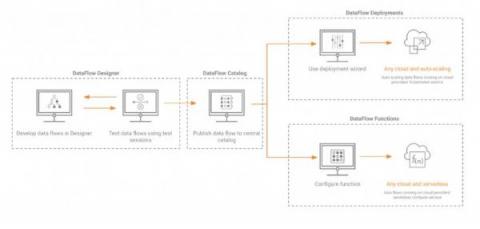
We are thrilled to announce that the new DataFlow Designer is now generally available to all CDP Public Cloud customers. Data leaders will be able to simplify and accelerate the development and deployment of data pipelines, saving time and money by enabling true self service.
We just announced the general availability of Cloudera DataFlow Designer, bringing self-service data flow development to all CDP Public Cloud customers. In our previous DataFlow Designer blog post, we introduced you to the new user interface and highlighted its key capabilities. In this blog post we will put these capabilities in context and dive deeper into how the built-in, end-to-end data flow life cycle enables self-service data pipeline development.
Continuous load testing is a powerful way of preparing for surges in traffic, without needing real users. Imagine you're a software engineer working on a website that's seen a recent surge in traffic. Despite initial testing indicating that the website should be capable of handling the increased load, the website crashes during peak hours. Load Testing is the process of simulating real-world usage of a website or application. The continuous version is when you integrate it into your development process as part of a CI/CD pipeline.
In this article, you'll learn how to implement a user authentication system in JavaScript. By the end of the tutorial, you'll have a REST API, a database to store user information, authentication via JSON Web Tokens, and even verification emails!
How Sift Delivers Fraud Detection Workflow Backtesting at Scale powered by BigQuery.
Effective data governance builds a culture of trust and collaboration around data.