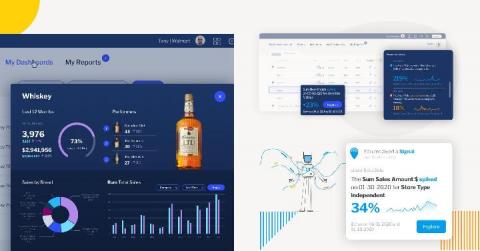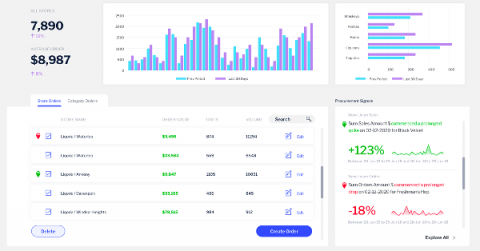
In 2020, however, contining to rely just on dashboards for your BI needs isn't enough. Why? Data is growing exponentially - in both size and complexity - within every business today. Manually keeping track of performance and searching for insights has become difficult for many users, and it's fostered new expectations - to be able to do more with analytics - including making it faster and easier to keep on top of changes or opportunities.
For our Head of Product Design and Creative Director, Tony Prysten, design is always top of mind. In analytics platforms, good design plays an important role in how people understand and use data. Here Tony shares how Yellowfin has been created with designers and developers in mind.
Have you ever felt that, by looking at just numbers, that you are probably missing out on the bigger picture? That’s, of course, why we have visualizations – to form patterns out of those numbers that we can then interpret, as well as glean insights from and deepen our understanding of what the data reveals. Now, what if we bring numbers and visualizations together in a table, one way to explore those numbers and find hidden gems of meaning? Let’s have a look at mini charts!
Consider building these dashboards that help answer essential business questions.
It’s time to get back to my favorite topic in visualization – how to best use color. I’ve written about it before in two of my previous posts, which you can read by clicking here and here. But, for this post, I’m going to go into a bit more detail on some tips and tricks that you can use.
Data visualisations allow users to organise and present log data in a practical, usable, and sensible manner. This tool in log management ensures that the data collected communicates real-time, actionable insights that will support timely and informed decision-making. Knowing which types of visualisation best suits a particular data set is critical in giving data visualisation optimal business value. Here is how to pick the right type of log data visualisation. Pie charts
Our Head of Product Design and Creative Director, Tony Prysten, has worked in brand, design and advertising roles over the course of his career. Bringing his wealth of experience to Yellowfin, he now shapes the creative and UX experience of our product. Here he shares his thoughts on how design flexibility improves the dashboard experience.
For this blog post, I’m going to take a step back and not go into data visualization best practices. Rather, I’m going to explore what you can do with your data before arriving at a final visualization – what I like to call “re-expressing” your data. Accordingly, we are going to look at the topic of transforming your data.
We are happy to announce the release of Kuma 0.4! This is a major release focused on significantly better observability capabilities that also includes many new features and improvements across the board. This release also marks the 10th release of Kuma since September 2019!