
Systems | Development | Analytics | API | Testing

BigQuery vs. Redshift: Which One Should You Choose?

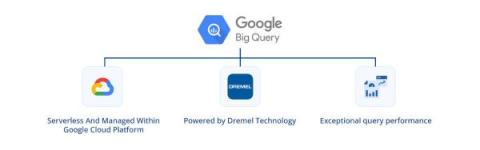
Considering BigQuery vs. Redshift for your data warehousing needs? This guide is for you. Both BigQuery and Redshift stand as leading cloud data warehouse solutions each offering a multitude of features catering to multiple use cases. Google’s BigQuery offers seamless scalability and performance within its cloud platform, while Amazon’s Redshift provides great parallel processing and tuning options.

Process, Store and Analyze JSON Data with Ultimate Flexibility

Javascript Object Notation (JSON) is becoming the standard log format, with most modern applications and services taking advantage of its flexibility for their logging needs. However, the great flexibility for developers quickly turns into complexity for the DevOps and Data Engineers responsible for ingesting and processing the logs. That’s why we developed JSON FLEX: a scalable analytics solution for complex, nested JSON data.

Achieve faster time to value with data observability and FinOps for BigQuery

Right now, 88% of companies surveyed are failing to achieve optimal price/performance for their analytics workloads. Why? They don’t have the staff, their skilled engineers spend too much time doing toilsome work, and optimizing data workloads for performance and efficiency. With this in mind, Unravel is hosting a virtual event to help you leverage Unravel to achieve productivity, performance, and cost efficiency with BigQuery.

What Is Data Governance and Why It Matters?

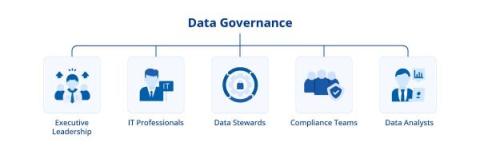
Data governance refers to the strategic management of data within an organization. It involves developing and enforcing policies, procedures, and standards to ensure data is consistently available, accurate, secure, and compliant throughout its lifecycle. At its core, data governance aims to answer questions such as.

Set your Data in Motion with Confluent on Google Cloud

Confluent is pioneering a fundamentally new category of data infrastructure focused on data in motion. Confluent’s cloud-native offering is the foundational platform for data in motion – designed to be the intelligent connective tissue enabling real-time data, from multiple sources, to constantly stream across the organization. With Confluent, organizations can meet the new business imperative of delivering rich, digital front-end customer experiences and transitioning to sophisticated, real-time, software-driven backend operations.

Data Integration in the Life Sciences: Eliminate Data Silos for Good

In the life sciences industry, where breakthroughs in research and healthcare are fueled by data, data silos can be a big problem. Data silos might be caused by things like legacy systems, departmental divisions, disparate data formats, or lack of interoperability standards. Data silos can manifest at any point in the product lifecycle and make it hard for the right people to access and use the information they need, when they need it.

The Modern Data Streaming Pipeline: Streaming Reference Architectures and Use Cases Across 7 Industries

Executives across various industries are under pressure to reach insights and make decisions quickly. This is driving the importance of streaming data and analytics, which play a crucial role in making better-informed decisions that likely lead to faster, better outcomes.