In today’s high-velocity digital arena, businesses are thrust into the whirlwind of global events, rapid technological advancements, and the incessant push for innovation. Yet, amidst the tempest of mergers, digital acceleration, and shifting tech paradigms, charting a confident path towards cloud migration can be daunting.
With the emergence of new creative AI algorithms like large language models (LLM) fromOpenAI’s ChatGPT, Google’s Bard, Meta’s LLaMa, and Bloomberg’s BloombergGPT—awareness, interest and adoption of AI use cases across industries is at an all time high. But in highly regulated industries where these technologies may be prohibited, the focus is less on off the shelf generative AI, and more on the relationship between their data and how AI can transform their business.
Various factors can impede an organization's ability to leverage Confluent Cloud, ranging from data locality considerations to stringent internal prerequisites. For instance, specific mandates might dictate that data be confined within a customer's Virtual Private Cloud (VPC), or necessitate operation within an air-gapped VPC. However, a silver lining exists even in such circumstances, as viable alternatives remain available to address these specific scenarios.
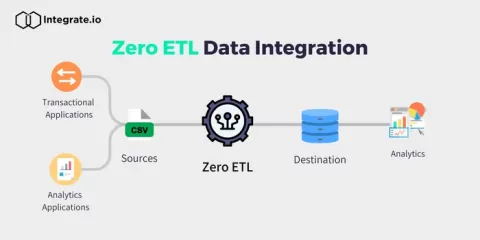
In a survey by the Harvard Business Review, 87% of respondents stated their organizations would be more successful if frontline workers were empowered to make important decisions in the moment. And 86% of respondents stated that they needed better technology to enable those in-the-moment decisions. Those coveted insights live at the end of a process lovingly known as the data pipeline.
Learn the crucial role of data governance and security in database replication.
At Cloudera, we’re known for making innovative technological solutions that drive change and impact the world. Our mission is to make data and analytics easy and accessible to everyone. And that doesn’t end with our customer base. We also aim to provide equitable access to career opportunities within data and analytics to the workforce of tomorrow.