Systems | Development | Analytics | API | Testing

How to Automate CSV Data in Real Time (2025)

CSV files are still the lifeblood of data operations in many mid-market companies across the U.S. From marketing teams exporting leads, to product managers analyzing usage data, to operations teams exchanging files with vendors, CSV remains a go-to data format. But with their flexibility comes fragility: missing values, duplicate rows, inconsistent types, and encoding errors can cause downstream chaos in analytics, automation, and reporting.

When Data Centralization Becomes Liability

Every enterprise has become a data company, with line-of-business teams requiring real-time access to integrated data for AI initiatives, customer experiences, and operational decisions. The urgency is palpable: marketing teams need customer behavioral data synced hourly for personalized campaigns, sales operations require CRM data flowing seamlessly to analytics platforms for forecasting, and AI initiatives demand clean, governed datasets to power everything from chatbots to predictive models.

Cloud Application Testing Guide: Key QA Strategies

Imagine your enterprise app testing runs smoothly under normal traffic, but during a flash sale, it crashes under the sudden surge of users. The root cause? The cloud application testing failed to uncover critical scalability gaps. This is happening more and more in 2025 as companies are moving to the cloud, but are underestimating the complexity of testing at scale. With cloud adoption accelerating, traditional testing can’t keep up with modern app demands.

Mobile App Testing Crash Rates: 2025 Stats & Trends

Imagine downloading a new app, opening it for the first time, and, boom, it crashes. Chances are, you won’t give it a second try. You’ll uninstall and move on. That’s exactly how unforgiving today’s users are. In 2025, the difference between a five-star app and one that gets deleted in minutes can come down to something as tiny as a 0.05% dip in crash-free sessions.
Sponsored Post

Top 14 Postman Alternatives

Postman has long been a go-to tool for API developers and QA engineers in providing a streamlined environment for testing and documenting APIs. Its user-friendly interface and robust features made it an industry standard. However, Postman isn't suitable for everyone. Its complexity has increased over the years, leading to a UI that can be overwhelming, and a steep learning curve - especially for beginners.

Accelerating Cloudnative Development & DevOps

Cloud-native development, and the resultant rise of DevOps, has transformed how software is built, deployed, and maintained. By embracing containerization, microservices, and continuous delivery, organizations have been able to deliver features faster, scale with demand, and recover from failures more gracefully than ever before. Many organizations are adopting these practices to keep up with industry demands and improve efficiency and security.

Hevo Demo Days: Building Resilient Data Pipelines That Just Work (Masterclass)

Data pipelines break at the worst time: a schema change, a bad API token, or a traffic spike right before the board meeting. In this masterclass, we’ll show you how to design pipelines that don’t flinch under pressure. We will build an end-to-end pipeline (DB + SaaS + Ads) with Hevo, inject real-world chaos (schema drift, bad data, failures), and recover instantly — all while keeping dashboards fresh and costs predictable.

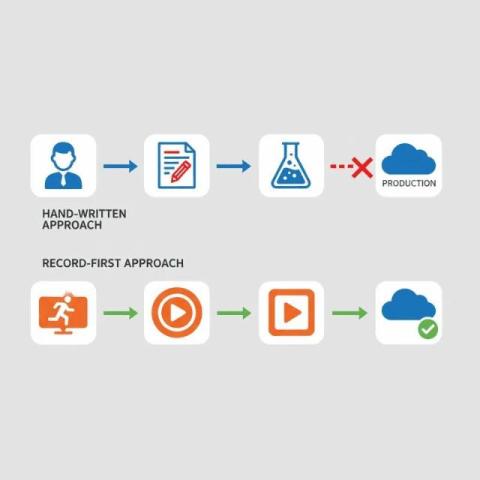
From session replay to development plan: annotations in full stack session recordings

Add sketches, notes, and requirements directly to your full stack session recordings. Highlight interactions, API calls, or traces and turn them into actionable development plans or AI prompts. Traditional session replay tools give you a window into what the user saw. A few let you blur sensitive data or leave a quick sketch. Some rely on third-party integrations to manage annotations at all.

Point-in-Time Data Provisioning for Recovery or Hot-Fix with Perforce Delphix

Discover how Perforce Delphix enables organizations to provision point-in-time data for instant recovery and accelerate hotfix testing. This demo shows how you can recover from incidents like data corruption or bad code deployments in minutes, not hours.