Systems | Development | Analytics | API | Testing

React Native OTA updates: Bitrise CodePush demo

From our CodePush webinar: a practical walkthrough of setting up and managing CodePush for over-the-air (OTA) updates on Bitrise using a React Native application. Staff Solutions Engineer Atanas Chanev shows you how updates are handled by pushing a direct update via the command-line interface, promoting a staging release to production, and executing an emergency rollback to a previous version using the API.

Enterprise Regression Testing: Architecting Continuous Validation for High-Velocity SDLCs

Engineering leadership faces a persistent dilemma: accelerating release velocity or protecting platform stability. As microservice architectures scale and daily commit volumes grow, test suite execution times stretch from minutes into hours. Flaky scripts and unstable UI locators break build pipelines, forcing senior engineers to spend sprint cycles debugging false positives.

How to Build a Self-Healing Data Pipeline with AI Agents (Step by Step)

Your data pipeline breaks at 2 AM. Again. By morning, corrupted data has cascaded through dashboards, reports sit empty, and your team spends half the day tracking down root causes instead of building features. This scenario plays out across organizations daily. Data engineers spend 44% of their time firefighting pipeline failures rather than delivering value.

What Is Agentic iPaaS? The Next Evolution of Integration Platforms

Traditional integration platforms were built for a world of predictable, human-configured workflows. But with enterprise software rapidly incorporating agentic AI capabilities, that world is changing fast. Agentic iPaaS represents a fundamental architectural shift where intelligent agents reason, adapt, and execute integrations autonomously, moving beyond simple "if-then" automation to goal-oriented systems that make real-time decisions.

Case Study 2026: Scaling a SaaS Platform with AI-Powered Load Testing Insights

Consider a SaaS provider experiencing a sudden surge in demand. After years of steady expansion, a viral integration sends active user sessions soaring – tripling overnight. Onboarding speeds up, clients invite their own users, and the platform expands into new regions. With this momentum, the risks escalate: any downtime or performance issue now threatens not only revenue but also customer trust and regulatory standing.

Swift Arrays: Complete Guide to Sort, Filter, Map and Reduce

Swift arrays are one of the most commonly used collection types in iOS and macOS development. They provide ordered, type-safe storage for values and include powerful higher-order functions such as map, filter, reduce, and sort. With value semantics, copy-on-write optimisation, and a rich set of built-in operations, Swift arrays make it easier to write safe, efficient, and expressive code. This guide will empower you to master the basics of Swift arrays and explore all the functionality they provide.

10 Signs You've Outgrown QuickBooks Inventory-and What to Do Next

As a business grows, inventory management becomes more complicated than simply knowing what is in stock. More products, additional sales channels, larger order volumes, and multiple storage locations can quickly turn a once-simple process into an operational challenge. QuickBooks Online offers useful built-in inventory management features for small businesses. It can help track inventory quantities, monitor stock levels, manage purchase orders, calculate inventory value, and keep accounting connected with everyday transactions.

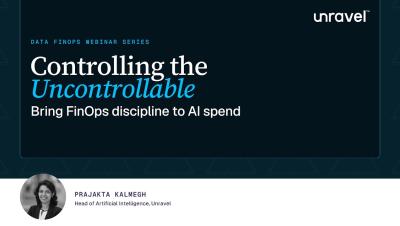
From Recommendation to Action: Scaling Autonomous Databricks Optimization in the Enterprise

Every Databricks optimization platform can tell you what should change. The harder question is: when should a system be trusted to make that change on its own? This session follows the journey of an Unravel customer as we moved from surfacing Databricks platform optimization recommendations to safely applying them in production. Prajakta will talk about the engineering decisions, the guardrails, and the trust model that made autonomous optimization possible in an environment where every change carries operational risk.