Home Health Manager with Bits In Glass
With home healthcare being more important than ever right now, see how Appian and our partner Bits In Glass brings real-time patient information to caregivers where they need it.


With summer just around the corner, things are really heating up. But you’re in luck because this month BigQuery is supplying a cooler full of ice cold refreshments with this release of user-friendly SQL capabilities. We are pleased to announce three categories of BigQuery user-friendly SQL launches: Powerful Analytics Features, Flexible Schema Handling, and New Geospatial Tools.
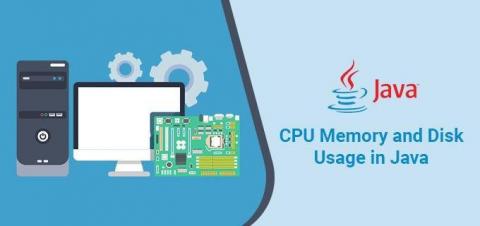
In this post, we will discuss some of the primary commands, tools, and techniques that could help to monitor CPU Memory and Disk Usage in Java. The Java tools observe Java bytecode constructs and processes. Java Profilers follow all system commands and processor usage. This lets you look at call arrangement at whatever point you prefer.
With billions of industrial IoT (IIOT) devices in place, generating massive volumes of data from “the edge,” the potential for proof of concept success for use cases in the factory can be paralyzing. While the value of this digital revolution, aka Industry 4.0, is clear, realizing the full promise has been slow. Research and real-life experience from Accenture shows that many manufacturers get stuck early on or can’t get beyond proof-of-concept pilots to scale.
The move into any new technology requires planning and coordinated effort to ensure a successful transition. This blog will describe the four paths to move from a legacy platform such as Cloudera CDH or HDP into CDP Public Cloud or CDP Private Cloud. The four paths are In-place Upgrade, Side-car Migration, Rolling Side-car Migration, and Migrate to Public Cloud.
At SmartBear we have a vision for improving the lives of developers, and adding quality into the software development supply chain – no matter where in DevOps maturity an organization sits. We’ve seen a lot of success in this effort, and no small part of it involves the way we manage our acquisitions and invest in their development teams. This is true for software solutions like Zephyr, TestComplete, and ReadyAPI, as well as our innovators behind OSS projects, like Cucumber.
APIs are the backbone of digital transformation. Via APIs, you can securely share data and functionality with developers both inside and outside of your organizational boundaries, letting you build applications faster, seamlessly connect and interact with partners, and drive new business revenue. Because APIs encompass business-critical information, any downtime or performance degradation can lead to significant loss in revenue, customers, and brand value.