Systems | Development | Analytics | API | Testing

An Overview of API Lifecycle Management

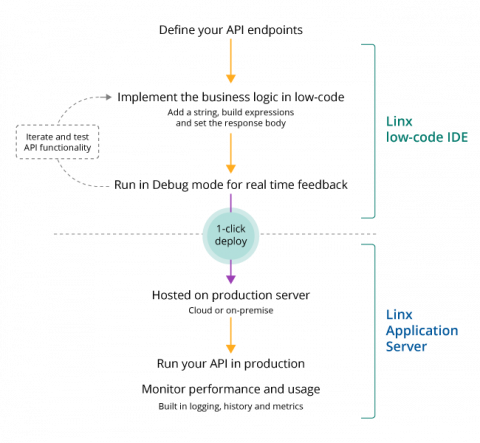
Understanding the stages of API lifecycle management offers an overhead look at application programming interfaces so you can find opportunities for improvement. Below, you will find the three major stages of an API lifecycle. Each section offers a closer look at the steps professionals often address when optimizing API strategy, functionality, access control, workflows, and other critical features.

How to Test Autoscaling in Kubernetes

In an ideal world, you want to have precisely the capacity to manage the requests of your users, from peak periods to off-peak hours. If you need three servers to attend to all the requests at peak periods and just one server at off-peak hours, running three servers all the time is going to drive up expenses, and running just one server all the time is going to mean that during peak periods, your systems will be overwhelmed and some clients will be denied service.

API-first development and the case for API mocking

One morning, you realize you have a great idea for an API. You discuss it with your team, then start building out the business case and technical requirements. Where do you go from there? You could write out the business requirements for the API and then code it. Or you could describe your API in a specification language, like OpenAPI, and use that definition to improve your team's understanding of the API and do some early testing. But are either of these the best solution?

Build a CRUD App with Node.js and MongoDB

Choosing the right tool for a web application can be tricky. But if you do, it will make things a lot easier for you. Depending on your application, combining Node.js and MongoDB works well most of the time — especially if you use a front-end framework like React (MERN), Angular (MEAN), or Vue (MEVN). In this tutorial, you will learn how to create a CRUD application using Node.js and MongoDB and write some basic tests for your Node.js API.

Account Locking in WSO2 Identity Server #Identityin15

In this episode, we will be discussing all about account locking in the WSO2 Identity Server. There are two main types of Account Locking in the IS which are Admin-Initiated Account Locking and Account Locking due to Failed Login Attempts. In this session we will be discussing these types in depth and how you can enforce them.

Video: Cloud Native Traffic Replay

With the introduction of new application platforms like Kubernetes, oftentimes the DevOps tooling around it needs to evolve. Cloud Native technology is powerful but complex. This 5 minute demo video shows how Speedscale provides production simulation capabilities so you can check for resiliency, quality and scalability in your Kubernetes clusters. You can record data and traffic in production and replay sanitized traffic on the fly against a new cluster.