Systems | Development | Analytics | API | Testing

AgentSpot Retail Use Case - Dealership Inventory and Pricing App

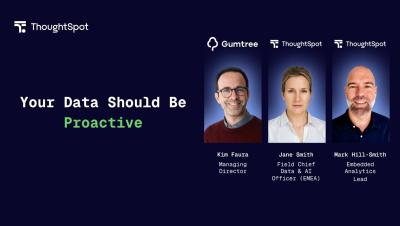
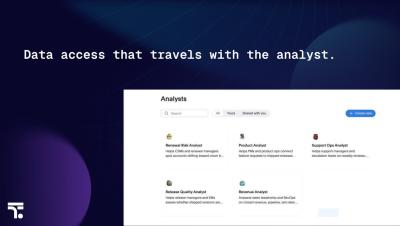
Traditional dashboards and static reports are not built around the person reading them. In this video, we introduce Data Apps in AgentSpot, a new surface alongside Agents and Workflows, and walk through a Used Car Lot Operations App built for a regional dealership manager. It pulls from ThoughtSpot data models and Slack conversations into a single narrative, scopes every app to the viewer's own credentials so people only see the data they have access to, and supports real interactivity like KPI card drill downs, custom filters, and what if pricing analysis.

QMetry vs. TestRail: Which is better for enterprise QA teams?

Choosing an enterprise test management platform is an architecture decision, not just a feature checklist. That choice comes down to how the platform stores data, how deeply testing connects to development, how far reporting and traceability extend, and how much the platform can absorb as testing volume, automation, and compliance requirements grow.

Enterprise Guide to Prompt Injection Testing: Securing Generative AI Systems

The swift introduction of Large Language Models (LLMs) and autonomous agents to business software ecosystems has posed a fundamental security issue: the unification of code and data. Traditional software designs carefully separate user input from operational commands. LLMs, on the other hand, are fed system commands, retrieved documents, user communications, and third-party API answers all in one context window.

Synthetic Monitoring Is Broken. Your Production Traffic Can Fix It.

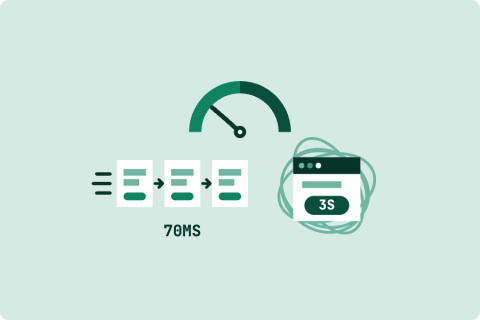
Synthetic monitoring has been a critical part of application reliability for years. It gives engineering and operations teams a way to proactively test applications, APIs, and critical customer journeys before users encounter problems. But there is a fundamental limitation with the traditional approach: Someone has to create the tests. As applications become more distributed and customer journeys become more complex, organizations can end up maintaining hundreds or even thousands of synthetic scripts.

Agent Plugins 1.0: One Packaging Format, and What It Changes for Testing Skills

Katalon's library of testing skills for AI agents holds 13 skills. Building it produces 124 files. The 13 skills are the actual work: how to plan a test cycle, how to design cases from a requirement, how to read a failing run and decide whether a release is safe. The other 111 files are packaging. Four of them arrived this month and they are the subject of this post.

What's New and Improved in Astera 11.2

A faster, efficient, more capable Astera with same licensing cost Astera 11.2 is available now for every product on the platform: Centerprise, ReportMiner, EDI Connect. High-volume jobs process up to 2x faster, extraction templates are generated under five seconds with AI-powered Auto-Generate Layout, and Dataflows can run a full retrieval-augmented generation (RAG) pipeline without a separate tool. The release also simplifies deployment, and adds email-driven workflow triggers.

Claude + MCPs Isn't a Semantic Layer: What Breaks When You Analyze Your Business Without One

Ask Claude for your average sales cycle today. Ask again next Tuesday. Same prompt, same MCPs, same playbook. There is a real chance the two numbers do not match. The reason is not exciting, and it costs you decisions. If you have wired Claude to your CRM, product, and finance tools through MCPs and given it a detailed playbook, you are already ahead of most companies asking whether AI can analyze the business. The gap between that and running the company off the answers is real, though.