Systems | Development | Analytics | API | Testing

Modern Software Development For Today's Systems & Applications



Tableflow and Real-Time Data Insights | Current'25 Bytes
We love our Current 2025 attendees! That’s why we want to hear their insights on all things data streaming. Check out Aikaterini’s thoughts on why Tableflow is going to drive innovation, and how streaming has unlocked real-time customer data at PPC Group.

When AI writes code that humans wouldn't: Testing in the age of agentic coding tools
Agentic coding tools like Cursor, GitHub Copilot, and OpenAI’s Codex are reshaping how software is developed. They enable developers to offload routine tasks and accelerate feature delivery. However, these tools also introduce new challenges – particularly in how we test and validate the code they produce.

What Is API Gateway Federation? A Guide to Centralized API Management
API gateway federation refers to the integration and management of multiple API gateways within a unified control plane. This approach allows organizations to use different API gateways, which may be from various vendors or tailored to specific environments (e.g., cloud-based, on-premises), while centrally managing their configurations, policies, and monitoring. Figure 1: API gateway federation with a unified control plane.

How to Link API Docs with CI/CD Pipelines
Outdated API documentation slows development and frustrates teams. Automating API documentation updates within your CI/CD pipelines solves this by keeping docs accurate, reducing errors, and saving time. Here's how.

Human-in-the-Loop at Scale: The Real Test of Responsible AI
AI failures rarely look like crashes. More often, they appear as confident but incorrect answers, subtle bias, or culturally inappropriate responses.

Who really owns your SAP data?
SAP’s business practices impact how enterprises access and integrate their data. This is the first blog in a multi-part series exploring how to access and best leverage your SAP data.

Compliance is Everyone's Job: How to Automate Your Headaches Away
Another day, another API. Fueled by AI-assisted coding and agile workflows, the speed of innovation has never been higher. But for the compliance team? It’s panic mode. Every new API must follow a minefield of internal rules: security protocols, naming conventions, reuse policies, documentation standards. And while the dev team is flying forward, compliance is stuck doing manual reviews, chasing specs, and untangling inconsistencies often after the code is already written.
Rethinking the Economics of Agentic AI: When 'Cheap' Gets Complicated
Everyone thinks AI is getting cheaper. But is it really? At first glance, the economics of AI seem to be improving for everyone. Thanks to continued model optimization and advances in hardware, the cost of running LLMs (also known as inference) is steadily decreasing. Developers today can access incredibly powerful models at a fraction of what it cost just a year ago. But there’s a catch.
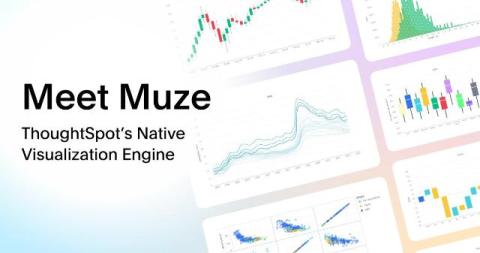
Meet Muze: ThoughtSpot's native visualization engine
Business intelligence platforms analyze vast amounts of data, requiring visualization engines that balance performance, flexibility, and ease of use. Traditional charting libraries treat each chart type as a distinct entity, requiring separate logic and code for each. This approach leads to code duplication, limited reusability, and reduced maintainability. Additionally, it’s cumbersome to effectively layer or combine visual elements due to these libraries’ rigid composability.