We collect the latest Development, Anaytics, API & Testing news from around the globe and deliver it direct to your inbox. One email per week, no spam.
For a long time, we spoke about “AI agents” like they were a future concept, something that might eventually book flights, run workflows, or make payments on our behalf.
Recognition highlights Hitachi Vantara's ability to help customers simplify management of hybrid cloud storage deployments, strengthen data resilience and improve operational efficiency.
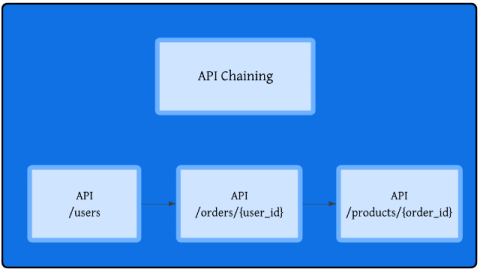
In today’s data-driven software-as-a-service (SaaS) environments, the need for complete customer insights often requires fetching and sharing data that lives across multiple API endpoints. That’s why many of our customers want to use Confluent’s data streaming and integration capabilities to implement real-time API chaining—a technique that allows them to automatically follow relationships between APIs.
In the last ten years, software testing has advanced significantly, but today’s applications require more than just using conventional forms of automated software testing or entry-level tools that employ artificial intelligence (AI). The rise of microservice architectures, API calls, and continuous deployment has led to another category of software testing products called "Generative" AI Testing tools.
Picture this: It's 3 AM. You’re on-duty in case there is an outage. A team in the other part of the world merged PR and released a new version of K2K Replicator and it crashed. Consumer group lag is spiking to the universe. You’re paged & woken up, went to your laptop, the team already reverted PR, things are stabilising, but what really happened, you have to investigate now as postmortem has to be done.
Non-crashing bugs don’t make your app crash, but they can ruin the user experience and hurt your app’s ratings. Fixing these issues is critical to keeping users happy. Here’s a quick rundown of the most common non-crashing bugs and how to address them.
Concurrency means running multiple tasks at the same time, and it’s a great way to ensure our apps stay responsive. Swift 5.5 introduced structured concurrency and the closely related concept of async/await to improve the management of asynchronous code, part of a wave of changes designed to ensure simpler code, improved error handling and automatic task lifecycle management.
Over the past few years, model providers have invested heavily in “guardrails”: safety layers around large language models that detect risky content, block some harmful queries, and make systems harder to jailbreak.