What is unit testing in mobile development?
Every mobile team, regardless of size, needs to invest time and resources into a robust set of testing practices. In this article, we'll present a quick-start guide to unit testing.


Every mobile team, regardless of size, needs to invest time and resources into a robust set of testing practices. In this article, we'll present a quick-start guide to unit testing.
In this series of blog posts, we will showcase an end-to-end hybrid cloud ML workflow using the Iguazio MLOps Platform & Feature Store combined with Azure ML. This blog will be more of an overview of the solution and the types of problems it solves, while the next parts will be a technical deep dive into each step of the process.
Read this hands-on guide to learn how to use the Bitrise Test Report add-on to visualize your test results for your development team!
In this article, we give you some tips to successfully transform Mobile DevOps processes in your e-commerce app and to minimize your revenue loss.
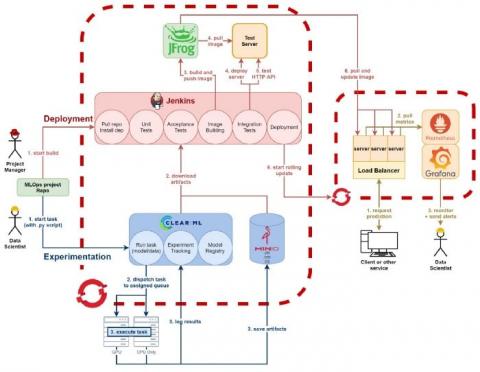
Most data science projects don’t pass the PoC phase and hence never generate any business value. In 2019, Gartner estimated that “through 2022, only 20% of analytic insights will deliver business outcomes”. One of the main reasons for this is undoubtedly that data scientists often lack a clear vision of how to deploy their solutions into production, how to integrate them with existing systems and workflows and how to operate and maintain them.