Mailchimp
Not subscribed to OpsMatters Newsletter


Enterprises have long relied on monolithic applications to run their operations and provide different functions and services to their customers. Monolithic software is designed to be self-contained; components of the program are interconnected and interdependent. If any program component requires an update, the whole application must be redeployed. As enterprises continue to grow their customer base, they will need to upgrade and scale their monolithic architecture.
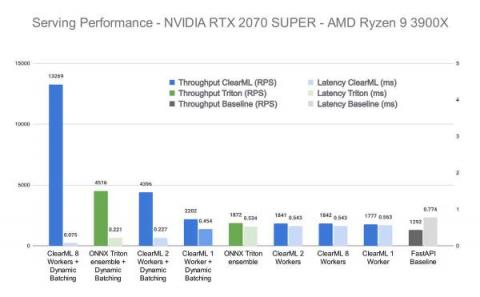
Deploying models is becoming easier every day, especially thanks to excellent tutorials like Transformers-Deploy. It talks about how to convert and optimize a Hugging face model and deploy it on the Nvidia Triton inference server. Nvidia Triton is an exceptionally fast and solid tool and should be very high on the list when searching for ways to deploy a model. If you haven’t read the blogpost yet, do it now first, I will be referencing it quite a bit in this blogpost.
Organizations have been focused on enhancing customer experiences to enable quicker responses to services and to provide localized behavior for many years now. However, with the Internet of Things (IoT), Smart Cities, Gaming technologies and Self-Driving Cars going more mainstream, there is an even greater need for organizations to react faster to customer behavior and bring solutions closer to the customers.
Introducing Dashboards — a great new way to quickly and easily view your most important metrics in one convenient place.
We're changing the way we provide Xcode versions to our macOS stacks users.
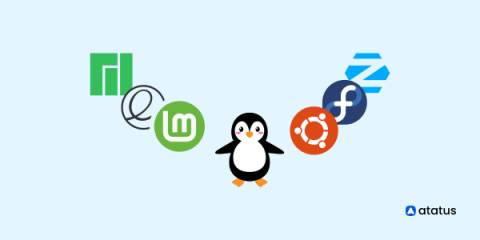
Linux is a free and open-source Unix-based operating system. As a result of Linux's security and flexibility, its use is gaining a great deal of attention these days. A Linux distro is an operating system that relies on the Linux kernel. A Linux server or high-end cloud device might be used on a desktop computer or laptop, but on a personal computer or laptop, it can be difficult to use. However, times have changed since then.