Systems | Development | Analytics | API | Testing

AI Input vs. Output: Why Token Direction Matters for AI Cost Management

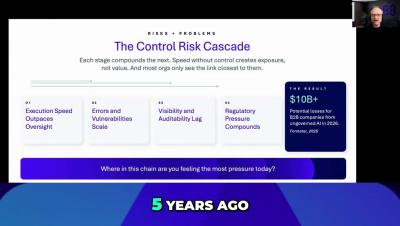
In the burgeoning intelligence economy, AI tokens are a metered utility, but enterprise profitability now hinges on a critical distinction: output tokens can cost up to 10x more than inputs, creating a new, invisible risk for cost overruns, particularly with Agentic AI. Learn how Kong AI Gateway and Konnect Metering & Billing provide the essential financial control plane to enforce directional guardrails, protect margins, and turn token consumption into realized revenue.

Stop GenAI Rate Limits: Model Routing & Token Throttling with WSO2 AI Gateway

Learn how to mitigate skyrocketing AI costs and prevent model outages using the WSO2 AI Gateway. This step-by-step tutorial shows you how to move beyond simple request limits and implement smart, token-based usage policies. We also demonstrate "Adaptive Model Routing" showing you how to automatically switch between models when rate limits are hit, and how to distribute traffic using weighted round-robin to optimize for cost and performance.

AI won't fix your SaaS company (w/ Adam Robinson @Retention.com)

Will AI change the way SaaS companies grow? According to Adam Robinson, founder and CEO of Retention.com, AI is not the answer most founders think it is. Adam has built multiple SaaS companies and scaled Retention.com from $0 to $22M ARR in four years without funding. In this episode of Move the Needle, he explains why the companies that scale – and the ones that stall – are separated by one thing.

Claude Can Now Build Inside Astera Centerprise. Here's How.

Astera Centerprise is already one of the most AI-forward data platforms available. Its built-in agentic AI creates data models, builds ETL/ELT pipelines, generates source-to-target mappings, orchestrates workflows, prepares data, and deploys schemas to production, all through natural language. You describe what you need; the AI uses real Centerprise tools to build it.

Introducing Agentic Performance Testing: Performance engineering meets AI speed

Thanks to AI, software today ships faster and with more complexity than ever before, and performance teams that rely on workflows built for a slower era are at risk of falling behind. Reliance on manual steps, niche expertise, and disconnected tools create bottlenecks that add risk to every release. Tricentis NeoLoad is leading this paradigm shift with AI-powered performance capabilities that close the gap and match the pace of validation to that of modern software delivery.

Introducing the first end-to-end enterprise agentic quality platform

AI has completely reshaped the boundary between human imagination and what’s possible. Along the way, AI use in business has become mainstream, with software delivery among its top adoption areas. In 2026, leading global technology companies are now using AI to generate the majority of their code, with some development teams reporting that they haven’t written code manually in months.

Governing Claude Code: How To Secure Agent Harness Rollouts with Kong AI Gateway

The AI coding and Agent Harness approach is no longer experimental. This is likely the most impactful agentic AI use case in production today, and Claude Code is one of the solutions really leading the charge. But as engineering teams race to adopt Claude Code across their organizations, a critical question emerges: who's governing all that LLM traffic?

Is AI dashboard a dead end? Here's what a real analytics platform actually does

Here’s a question worth taking seriously if you are a BI practitioner: if I can describe what I want to an LLM and have a working dashboard in under a minute, what exactly am I paying for with a purpose-built analytics platform like Yellowfin? It is a fair challenge.

Best tool for AI-powered automated testing: Reflect vs. ACCELQ

If you’re shipping multiple releases weekly and your team is drowning in test maintenance, you’ve likely discovered the painful truth about traditional automation: code-heavy frameworks break faster than your developers can ship features. Every CSS class rename triggers test failures. Every component refactoring creates maintenance sprints.