Systems | Development | Analytics | API | Testing

Prompt, Deploy, Pray Is Dead: Validating AI Code with Proxymock

Recent outages tied to AI-assisted code changes have pushed companies into a corner. After several incidents with massive “blast radius” impacts, organizations like Amazon introduced stricter controls—mandating that senior engineers manually review all AI-generated code before it hits production. That response makes sense on paper, but it exposes a fatal flaw in the modern development pipeline.

Evolve25: AI Readiness and the Future of Intelligent Enterprises with AWS and Cloudera

Discover why the transition from Generative AI to Agentic AI is the key to unlocking $40M+ in business value, even for non-technical users via Cloudera Agent Studio. Learn how the AWS and Cloudera partnership solves the "Data Readiness" challenge by bringing AI to the data, whether on-prem or in the cloud. This session covers critical strategies for AI governance, hybrid architecture, and the shift from task-based tools to autonomous digital workforces.

DreamFactory 7.4.4 Release: AI-Optimized Data Models, Custom MCP Tools, and Granular Access Controls

DreamFactory 7.4.4 is a significant release for teams connecting AI agents to enterprise databases through the Model Context Protocol (MCP). The new _spec endpoint gives LLMs a complete understanding of any database schema in a single API call. Custom MCP tool definitions let admins extend their MCP server beyond built-in database operations. And new per-tool toggle controls with role-based service discovery bring the governance enterprises need before deploying AI-database integrations to production.

AI won't fix your SaaS company

Right now, many SaaS leaders are wondering how AI will change building and scaling software companies? AI is transforming how we build software, how teams operate, and how quickly companies launch new products. According to Adam Robinson, founder and CEO of Retention.com, there’s something that most leaders overlook. Your problems won’t get solved by AI but by product-market fit.

Resume tokens and last-event IDs for LLM streaming: How they work & what they cost to build

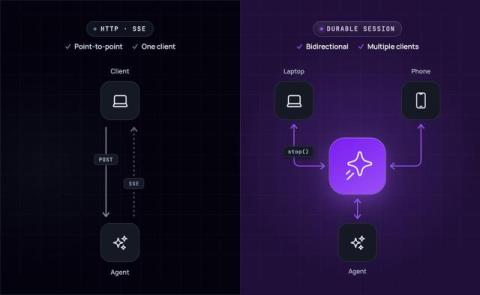
When an AI response reaches token 150 and the connection drops, most implementations have one answer: start over. The user re-prompts, you pay for the same tokens twice, and the experience breaks. Resume tokens and last-event IDs are the mechanism that prevents this. They make streams addressable – every message gets an identifier, clients track their position, and reconnections pick up from exactly where they left off. The concept is straightforward.

Meet Bitrise AI: 1-minute feature tour

In this fast demo, Naveen Nazimudeen walks you through the Bitrise AI features. Unlike typical agents that only suggest changes, Build Fixer applies the fix for you, then runs a build to validate and opens a PR. Code Reviewer automatically reviews new PRs with zero noise. Bitrise provides a full-stack, vertically integrated mobile DevOps solution that unites the tools, processes and testing frameworks engineering teams need to build best-in-class mobile experiences. Over 400,000 developers use Bitrise’s products: Bitrise CI, Build Cache, Release Management, and Insights.

The Future of Data & AI is Anywhere Cloud! #Cloudera #AI #Tech #Shorts

Experience a true anywhere cloud with the only data and AI platform that delivers a complete cloud experience regardless of your location. By providing unified security and governance, you can securely access 100% of your data across both on-premises and cloud environments.

WSO2 AI Guardrails: PII Masking, Prompt Injection & Safety

Generative AI offers incredible potential, but it comes with real risks like data leakage and prompt attacks. In this video, we demonstrate how WSO2 AI Guardrails act as an intelligent filter to secure your AI integrations and ensure compliance. We walk through the configuration of four critical advanced guardrails to inspect both incoming requests and outgoing responses, helping you move from risky experiments to safe, reliable production services.

What Is an Agentic Semantic Layer, and Why Does It Matter?

AI can now generate SQL, build dashboards, and answer questions in plain language. But generating queries isn’t the same as understanding a business. The model might not know which revenue definition finance approves, how your fiscal calendar works, or which fields require restricted access. As AI agents become the front door to analytics, the real challenge isn’t query generation; it’s semantic grounding. That’s where the Agentic Semantic Layer becomes essential.