Systems | Development | Analytics | API | Testing

How to Review and Validate AI-Generated Test Cases (Without Blindly Trusting Them)

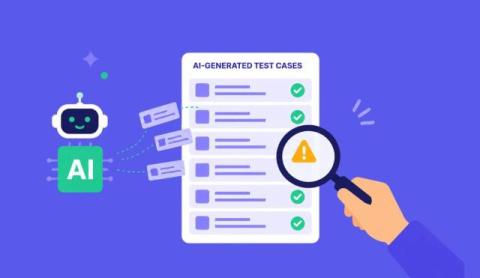
AI can write a test case in seconds. It looks clean. It is structured correctly. It has a name, preconditions, steps, and expected results - everything a good test case should have. And that is exactly the problem. A polished test case is not the same as a correct one.
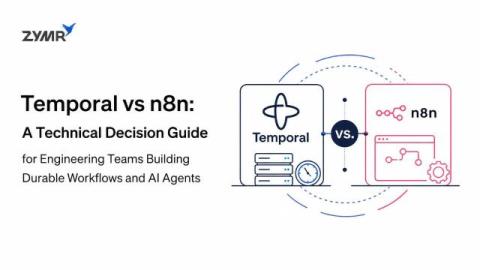
Temporal vs n8n: A Technical Decision Guide for Engineering Teams Building Durable Workflows and AI Agents

If you have watched a Temporal demo and an n8n demo back to back, the reaction is almost universal: “Wait, aren’t these the same thing?” Both stitch together a sequence of steps. Both retry failures. Both, as of 2026, market themselves around AI agents. On a whiteboard, they look like cousins. They are not. Temporal vs n8n is one of the most common false equivalences in modern engineering, and getting it wrong is expensive in both directions.

AI Coding Tools and API Governance: Here's Why You Need Both.

GitHub Copilot, Claude, and Cursor have become genuine superpowers for API development. They draft OpenAPI definitions, generate endpoints, propose schema changes, and write test cases — all from inside the IDE, in real time. Teams using these tools are generating API definitions faster than most thought possible even a few years ago. That velocity is real, and it’s reshaping how engineering teams think about their toolchain.

Is AI making your teams better, or just busier?

AI adoption programs tend to end in the same place. Tools are accessible, usage is up, and there's a dedicated Slack channel for wins. Six months later, nothing about how the team works has fundamentally changed. People are doing the same things – just slightly faster. And it’s easy for programs to stall when you’re measuring the wrong thing. Adoption (whether people have access and whether they're using the tools) is visible and easy to report.

AI Agents Deployed, but what about cost optimization?

AI agents are no longer a pilot-stage bet. As of 2026, 80% of enterprises have at least one production AI agent deployed. The global AI agents market has crossed $10.91 billion and is sprinting toward $52.62 billion by 2030. The cost-per-task economics are staggering: a human-handled customer support ticket costs $4.18 on average. An AI agent resolves the same ticket for $0.46. That is a 9x cost reduction, right there.

How durable sessions unify human-to-human and human-to-agent messages

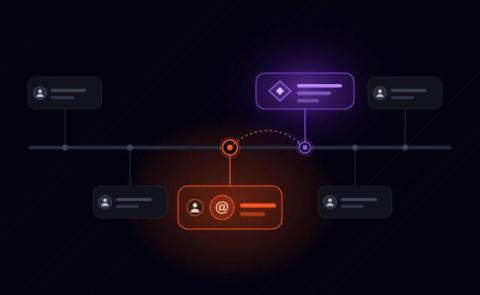
AI chats are often a rather solitary experience: just you and ChatGPT, sitting there together, solving a problem. But so many of the tasks that we perform day to day are ones that benefit from, or often even require, collaboration with other people such as colleagues, family members, or friends. So, if AI agents are helpful, and other people are helpful, then how can we provide a space for multiple people to collaborate with each other and with AI agents?

Debug a Node.js Memory Leak in Minutes with AI-Powered Heap Snapshot Analysis

Memory leaks are among the most frustrating production issues to investigate. At first, everything looks normal. Requests are processed successfully, users aren't reporting problems, and the application appears healthy. Then memory usage starts climbing. Garbage collection runs more frequently. Performance degrades. Eventually, the process becomes unstable or crashes altogether. Detecting a memory leak isn’t even half the battle.