Systems | Development | Analytics | API | Testing

High Availability (Multi-AZ) for Cloudera Operational Database

In the previous blog post we covered the high availability feature of Cloudera Operational Database (COD) in Amazon AWS. Cloudera recently released a new version of COD, which adds HA support to Microsoft Azure-based databases in the Cloud. In this post, we’ll perform a similar test to validate that the feature works as expected in Azure, too.

DNS Zone Setup Best Practices on Azure

In Cloudera deployments on public cloud, one of the key configuration elements is the DNS. Get it wrong and your deployment may become wholly unusable with users unable to access and use the Cloudera data services. If the DNS is set up less ideal than it could be, connectivity and performance issues may arise. In this blog, we’ll take you through our tried and tested best practices for setting up your DNS for use with Cloudera on Azure.

Tabular Reporting - Do More with Qlik Webinar Replay

This session will demonstrate how Tabular Reporting used within Qlik Sense Applications enables users to efficiently address and manage common operational report creation and distribution requirements. Attendees will discover how report developers can create formatted Excel Templates directly from Qlik data and visualizations. The webinar will also highlight the power of governed Report Tasks, showcasing the seamless distribution and “bursting” of reports to stakeholders. By leveraging Tabular Reporting, the Qlik platform becomes the central source for crucial operational decisions, customer communications, and more.

Accelerating Queries on Iceberg Tables with Materialized Views

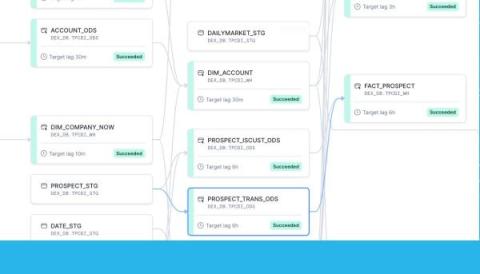
This blog post describes support for materialized views for the Iceberg table format in Cloudera Data Warehouse. Apache Iceberg is a high-performance open table format for petabyte-scale analytic datasets. It has been designed and developed as an open community standard to ensure compatibility across languages and implementations.

Top 3 Data + AI Predictions for Manufacturing in 2024

Investment in AI for manufacturing is expected to grow by 57% by 2026. That’s hardly surprising — with AI’s ability to augment worker productivity, improve efficiency and drive innovation, its potential in manufacturing is vast. AI’s predictive capabilities can help manufacturing leaders anticipate market trends and make data-driven decisions, creating financial opportunities for suppliers as well as customers.

Health Care Outside of the Box

How enterprise-grade data management creates better and more efficient care. In the last few years, the acceptance of telehealth has become more widespread as patients and providers found they could maintain continuity through phone and video collaboration, instead of in-person visits. In many cases, a level of care that once required a drive to the clinic or hospital could be delivered over a mobile phone or laptop, with no travel and no waiting room.