Quick Qlik - Set Analysis with Measures!
in this Quick Qlik Mike Tarallo shows you how simple it is to use a Set Analysis Expression with a measure comparison instead of the traditional dimension modifier.


Whether they know it or not, every company has become a data company. Data is no longer just a transactional byproduct, but a transformative enabler of business decision-making. In just a few years, modern data analytics has gone from being a science project to becoming the backbone of business operations to generate insights, fuel innovation, improve customer satisfaction, and drive revenue growth. But none of that can happen if data applications and pipelines aren’t running well.
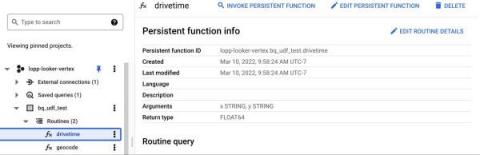
BigQuery's Remote Functions (in preview) make it possible to apply custom cloud functions to your warehouse without moving data or managing compute. This flexibility unlocks many use cases including data enrichment. In this post we demonstrate a pattern for combining BigQuery with the Google Maps API to add drive times to datasets containing origin and destination locations. This enrichment pattern is easily adapted for address geocoding or adding Google Map's place descriptions to locations.
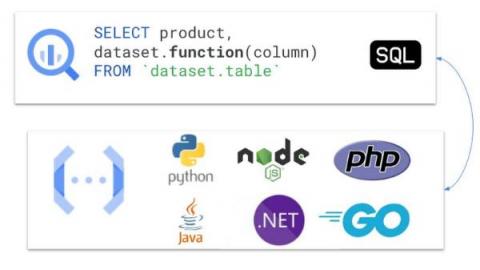
Today we are announcing the Preview of BigQuery Remote Functions. Remote Functions are user-defined functions (UDF) that let you extend BigQuery SQL with your own custom code, written and hosted in Cloud Functions, Google Cloud’s scalable pay-as-you-go functions as a service. A remote UDF accepts columns from BigQuery as input, performs actions on that input using a Cloud Function, and returns the result of those actions as a value in the query result.