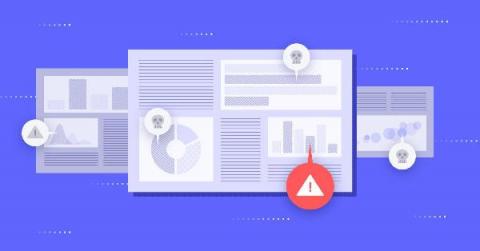
Reporting tools solve a key problem for businesses by enabling them to communicate data in a way that is accessible, easy-to-understand, and useful for both frontline staff and management teams. These tools take raw data and turn it into tables, charts, and graphs ready for consumption, turning complicated data into visuals that better enable users to spot patterns and trends.
The introduction of CDP Public Cloud has dramatically reduced the time in which you can be up and running with Cloudera’s latest technologies, be it with containerised Data Warehouse, Machine Learning, Operational Database or Data Engineering experiences or the multi-purpose VM-based Data Hub style of deployment.
Cloudera Data Platform (CDP) provides an API that enables you to access CDP functionality from a script, or to integrate CDP features with an application. In practice you can use the CDP API to script repetitive tasks, manage CDP resources, or even create custom applications. You can learn more about the API in its official documentation. There are multiple ways to access the API, including through a dedicated CLI, through a Java SDK, and through a low-level tool called cdpcurl.
Three Divisions, With Over 8,000 SKUs, Are Leveraging Qlik Sense Enterprise SaaS to Get a Centralized View of Sales, Operations and e-Commerce Performance and Opportunities.
In this article, I will be focusing on the contribution that a multi-cloud strategy has towards these value drivers, and address a question that I regularly get from clients: Is there a quantifiable benefit to a multi-cloud deployment? That question is typically being asked when I explain the ability to leverage container technology that offers a consistent deployment environment across multiple clouds and form factors (public, private, or hybrid cloud).