Ably extends your Kafka pipeline to end-users at the edge
This article explains how Ably complements Kafka to reach end-users on the public internet.


This article explains how Ably complements Kafka to reach end-users on the public internet.
Kong Gateway integrates with Hazelcast to implement advanced policies for rate limiting besides the fundamental options provided by the Kong plugins, including distributed compute, security, zero downtime, and cloud agnostic.
WSO2 Identity Server provides many identity management workflows and password management workflows out of the box, e.g., self-registration, user invitations, password recovery, etc. However, it is not unusual to come across a situation where the workflow capabilities provided out of the box in the product, is not sufficient to fulfill your business requirement.
Photo by Micah Williams on Unsplash This article discusses a new feature which will be released for the public distribution of WSO2 Identity Server 5.12.0. This feature was developed to overcome the following scenario: You can refer to the following diagram for a deeper understanding of the above flow. This scenario can be experienced by anyone. As such, we introduced a new way to handle this scenario (as shown below) for the notification based password recovery flow.
In the previous articles, we learned how to deploy the Flutter desktop for Linux, the web app with Firebase, and S3. And in this tutorial, I will show you how to build and package a Flutter Linux Desktop app with Bitrise.
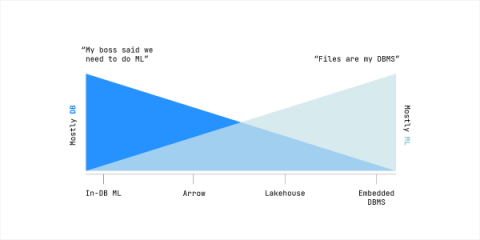
When we think of the various people and teams making use of ML and DBMS, we can place them on a spectrum based on the composition of their work.
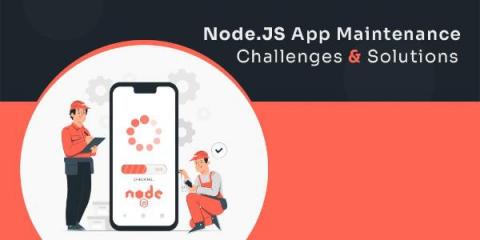
Web applications are necessary to enhance the visibility of a business organization and help them achieve better ROI. Therefore, firms need to choose the right web development language to get the best results. Node.js has emerged as a leading programming language for developing web applications. But in hindsight, there are some complications that developers face with Node.js app maintenance.
Machine learning (ML), more than any other workflow, has imposed the most stress on modern data architectures. Its success is often contingent on the collaboration of polyglot data teams stitching together SQL- and Python-based pipelines to execute the many steps that take place from data ingestion to ML model inference.