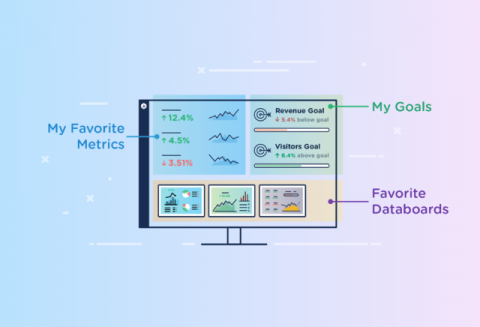
Say Hello to a More Personalized Databox
New customizable Home screen and improved design for quicker access to what’s important and a new wizard for building new dashboards faster.


New customizable Home screen and improved design for quicker access to what’s important and a new wizard for building new dashboards faster.
The cloud native paradigm for application development has come to consist of microservices architecture, containerized services, orchestration, and distributed management. Many companies are already on this journey, with varying degrees of success. To be successful in developing cloud native applications, it’s important to craft and implement the right strategy. Let’s examine a number of important elements that must be part of a viable cloud native development strategy.
In the first blog post of the series, we saw the dire state of analytics adoption. This problem feeds into the low usage and governance of data across organizations. Then, in the second post, we saw how the evolution of analytics has brought us to a prime position for augmented analytics. But will this new wave of augmented analytics break through the barriers to BI adoption?
This conference is shaping up to be the largest ever focused on Computer Vision and Visual Artificial Intelligence. We invite you to attend the session and meet our experts. To arrange a time to meet during the conference, send an email to Neil Berns at [email protected].
Software vendors that are looking to accelerate their path to AI need to take advantage of the AI already in analytics platforms. Gartner believes that the future of analytics is augmented. That is, analytics will be AI-driven and all end-to-end use cases will be automated. I also believe it won’t be long before analytics is no longer on our desktops - instead it’ll be embedded in applications.
If, as we saw in part one of this series, 77% of businesses are 'definitely not' or 'probably not' using analytics to its full extent and the adoption rate of analytics platforms is an abysmal 32%, something drastic needs to happen. Can the era of augmented analytics with its machine learning and AI fix this adoption issue?
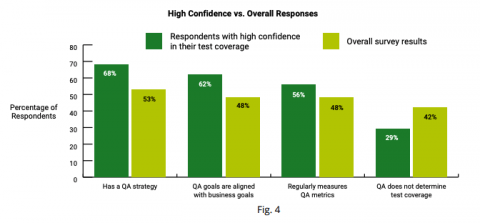
In our recent poll on the health of the QA industry, we found that over half of all QA teams surveyed are not very confident in their ability to ensure a high-quality product. Having a high degree of confidence in your QA process is important, as it helps you ensure that every deployment goes smoothly and that resources are being allocated efficiently.
Last month we brought together two data experts for a webinar discussion on best practices and approaches to implementing analytics and defining data roadmaps. The renowned Dan Vesset from IDC joined Qlik’s Michael Distler to review the current state of the data journey and how users can plan for success.
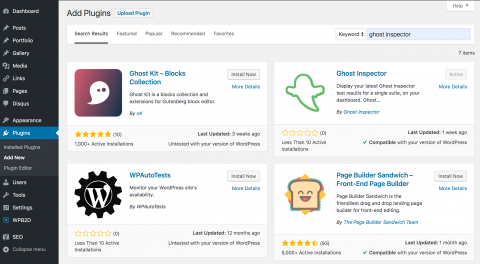
Ghost Inspector is an automated browser testing tool for continously monitoring websites. Many of those websites run on WordPress. After lots of demand from our users, we've built a plugin to show your Ghost Inspector test results right inside your WordPress admin panel. The plugin enables you to display the latest test results for a single suite on the dashboard of any self-hosted WordPress installation. Keep reading to learn how to install and setup the plugin.
If you’ve got an app that keeps going down for no apparent reason, don’t worry: this quick and easy guide will give you the tools to get it up and running smoothly. If you’re not from the tech world yourselves, you probably think us programmers get everything right all the time. That everything in our world is so cutting-edge it can slice through ice, and app crashes are practically an alien concept for us.