Systems | Development | Analytics | API | Testing

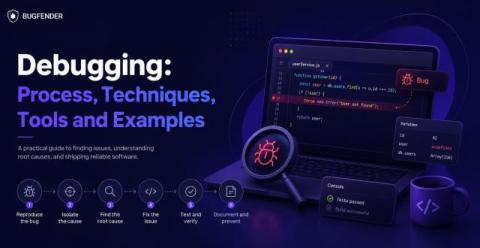
Debugging: Process, Techniques, Tools and Examples

Debugging is an essential skill that allows software developers to prevent crashes and maintain reliable code. Virtually all applications run into bugs at some point, due to logic errors, unexpected inputs or system interactions. It’s vital that we have effective tools and processes to resolve them. This guide will give you a step-by-step guide to debuggging, highlighting common error types with practical means to resolve them.


AI-Powered Claims Automation in 2026: How LLMs and Intelligent Document Processing Transform Insurance Operations

AI claims automation is becoming a major focus for insurers as manual claims processing continues to create cost, speed, and customer-experience challenges. Traditional systems often route documents through multiple human reviewers, creating bottlenecks that consume time and operational resources.

How to self-host OTA updates for React Native

If you are a React Native engineer, your job isn’t typically about maintaining infrastructure. So “self-hosted OTA” can sound like a trap. Even if your Expo Update bill is hitting six figures, it’s easy to assume that self-hosting isn’t worth the potentially huge time sink. That fear is understandable, but it doesn’t have to play out that way.

OCR Scanned Documents: How Intelligent Character Recognition Extracts Data at Scale

Most of what lands in an enterprise inbox isn't a clean, high-resolution PDF. It is a faxed invoice with coffee stains, a mortgage pay stub photocopied six times, a bill of lading stamped across the important fields, a 120 DPI scan from a twenty-year-old multifunction printer. Astera ReportMiner's intelligent character recognition is built for the real-world scanned document quality. For most enterprises, these degraded documents aren't edge cases. They make up the majority of the inbound pipeline.

Best AI OCR Software in 2026: A Buyer's Guide Backed by User Reviews

This roundup is built from verified user sentiment compiled from G2, Capterra, PeerSpot, Gartner Peer Insights, and vendors' own official pricing pages. Quotes are paraphrased except where direct quotations are clearly marked and kept under 15 words. Every pro and con traces back to a named review platform, and every rating is the platform's current aggregate at the time of writing.

Application Level Dependency Chaos Testing

Somewhere in your service is a branch that has never executed. Not a rare one, a never one. It handles a dependency being unavailable: it reads from a cache, it returns a stale value, it marks the response degraded so callers know not to trust it too far. It was written carefully. It was reviewed. Whether it works is an open question, because nothing in the test suite makes that dependency fail, and the dependency does not fail on request.

Break One Dependency, Not The Whole Cluster

Scoped chaos rules are now in proxymock. A filter query picks the traffic, an effect perturbs it, and every response that gets touched is labelled so you can tell an injected failure from a real one for the rest of the run. Available in v2.5.892 and newer. The short version of why: kill a pod and you learn something real, but you do not learn what your service does when a dependency stays up and starts lying to it.

From Chatbot to Compound AI System: Infrastructure Patterns for Multi-Model, Tool-Using Applications

Two years ago, GenAI in production usually meant a single LLM serving a single endpoint. In 2026, it usually means much more. The applications shipping in front of users today are compound AI systems: orchestrated pipelines of retrievers, embedders, dialogue models, classifiers, code interpreters, SQL executors, and tools, with a single user request fanning out to several model calls across the stack.