Systems | Development | Analytics | API | Testing

Questions to Ask AI About Your Sales Pipeline and CRM Data

The right question returns a deal name, an owner, and a dollar value. The wrong one returns a framework about pipeline health. The difference is not the model, it’s how you ask. It’s 7:47am Monday. Your pipeline review starts at 8. You have thirteen minutes to find out which deals need attention, which reps are behind pace, and whether you’re actually going to hit the number this quarter.

5 Signs Your EPM Can't Scale With Your Growth

High-growth companies move fast. Headcount doubles. New markets open. Acquisitions close. And somewhere in the middle of all that momentum, your finance team is still manually stitching together spreadsheets, waiting on IT to refresh data, and running planning cycles that take longer than they should. The problem often isn’t your people, it’s your Enterprise Performance Management (EPM) system. The platform that served you well at $50M in revenue can become a serious liability at $200M.

Software Release Life Cycle: Stages, Process, And Best Practices

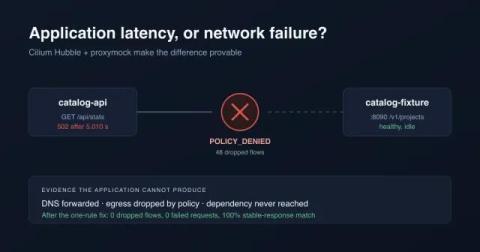
The software release life cycle (SRLC) is where most engineering failures begin. Not because of bad code, but because of a broken release process. In modern environments, applications run across APIs, microservices, and cloud infrastructure, where even small changes can ripple far. A well-defined release cycle – with clear stages, automated validation checkpoints, and rollback strategies is what gets code to users without surprises. Traditional testing validates components in isolation.

In-Depth Testing: Stop Shipping Bugs Your Tests Missed

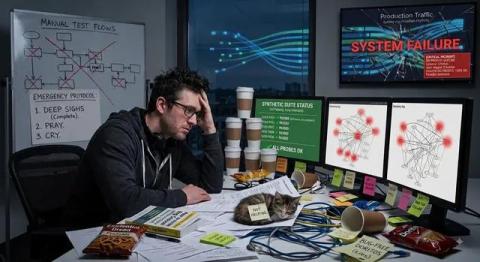
I’ve pushed code that cleared every CI check, watched the green badge appear, shipped to production — and then spent the next two hours on a rollback. That experience was my real introduction to in-depth testing. In-depth testing is the practice of validating software behavior across multiple layers: unit logic, component interactions, end-to-end user flows, and failure conditions.

Sustainability from the Boardroom to the Control Plane

The definition of sustainability is being re-written in the age of AI. Yes, the current discourse that focuses on green IT considerations, including resource efficiency, carbon accounting and water use, is necessary. But it is incomplete. Sustainability in the age of AI implies sustaining the long-term flourishing of people, businesses, societies, and planetary systems together, not just minimizing energy use or carbon.

Git review for TestComplete projects

Teams using TestComplete face a common problem: one small test change can produce a wide set of modified files, and not all of them deserve the same level of scrutiny. The fix is not to review everything equally – it is to classify TestComplete artifacts by risk, then standardize how your team reviews, stages, and merges them. This article outlines this process and offers best practices for using Git effectively with TestComplete projects.

Introducing Kong A2A and MCP Metrics: Visibility and Governance for AI Tool Adoption at Scale

Scaling LLM and agentic AI adoption from pilot programs to enterprise-wide deployments is a massive logistical rollout. As AI and agentic usage grow, so does a nagging question for leadership: **Are agents using the right tools to get the job done?** While raw infrastructure metrics might tell you if a server is "up," they fail to tell you if your AI investment is being leveraged.

What App Stores allow with OTA updates: Apple and Google policy explained

A critical bug is live in production. Your fix is ready. And now your team is staring at a potential multi-day wait for app store review. This is exactly what over-the-air (OTA) updates are designed to solve. Tools like Expo EAS Update, CodePush, Shorebird, Revopush or Stallion make it easy to push updates directly to users’ devices. But OTA updates don't bypass app store rules, they operate within boundaries that both Apple and Google have defined.

The Last (and Longest) Mile of Apache Kafka Migrations: Client Migrations With KCP and Confluent Cloud Gateway

In a previous blog post in this series, we introduced Kafka Copy Paste (KCP), an open source CLI tool that automates the discovery, provisioning, and data migration steps of moving your Apache Kafka environment to Confluent Cloud. We walked through how KCP and Cluster Linking work together to reduce a process that traditionally took weeks to a matter of hours. At the end of that post, we hinted that automated client migration was coming soon. That day has arrived.

Agentic Analytics in Practice: How AI Moves from Answering Questions to Closing the Loop

I spent years building dashboards that nobody used. Not because they were bad dashboards — they were actually pretty good. Clean visualizations, real-time data, all the metrics leadership said they wanted. But here’s what I learned: the problem was never the dashboard. The problem was the gap between seeing what happened and doing something about it. You look at a dashboard. It doesn’t act.