Systems | Development | Analytics | API | Testing

Test generation got free. Test governance didn't.

Over the past twelve months, something has shifted in how software teams think about quality. Claude Code, Cursor, and Playwright agents have made it genuinely easy to generate functional tests without deep automation expertise. The impact is showing up across two very different kinds of teams: Both paths lead to the same place: tests accumulate without governance, you get coverage without traceability, and there’s automation debt no one owns. But coverage numbers and quality are not the same thing.

A Beginner's Guide to Turning Old Photos Into Videos

Somewhere on a hard drive or in a shoebox, there are photographs that matter to you - a grandparent on a doorstep, a holiday nobody documented properly, a childhood pet. They get scanned, admired for a moment, and filed away again. Motion changes how those images land, because movement restores something a still frame flattens: presence. This tutorial assumes no editing experience. You will learn what photo animation actually does, how to prepare an archive image, and how to finish a short, respectful memory clip in a single sitting.
Sponsored Post

Two confident fixes missed this production bug

Every new signup posts a message to our Slack. The format is dull and reliable: Overnight this week one arrived like this: That trailing nothing was the entire incident. No error logs, no alerts. A returning user had signed up, our signup service had attached them to a tenant we deprovisioned back in December, and the only symptom in the whole company was a Slack message that ran out of words. Their company's email domain still pointed at the dead tenant, so instead of a fresh workspace they landed in a corpse: domain mapping still live, cloud infrastructure long gone. I'm on call this week, so I pulled the thread.

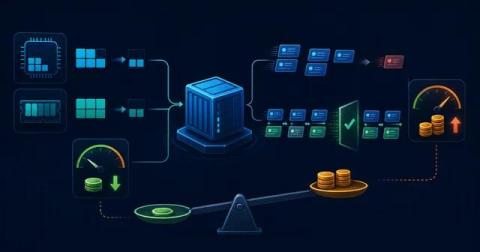
The Pod Was Cheaper. The Service Wasn't.

A smaller Kubernetes pod can lower allocation cost while completing less work. Green status codes and matching schemas can hide it. This walkthrough combines OpenCost allocation data with proxymock behavior and performance evidence. A candidate passes only when behavior and throughput hold while unit cost falls.

Diagnose Serial N+1 API Calls With Tempo + proxymock

One API request took 302 milliseconds. Nothing failed. CPU was mostly idle. The response was correct. The trace made the problem obvious: eight inventory calls, each waiting for the previous one. But the trace could not tell me why the application made eight calls, or whether changing their execution would preserve the response. It showed the shape of the wait, not the input that created it.

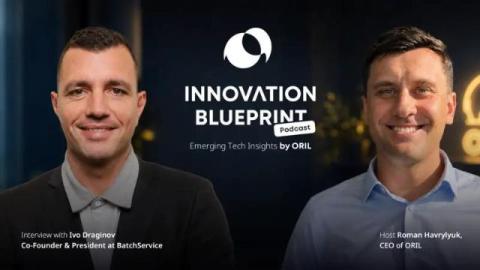
What Actually Makes Property Data AI-Ready - With Ivo Draginov, BatchService | The Innovation Blueprint Podcast

There’s a question worth asking about most property data companies: does the data come first, or the business problem? On a recent episode of The Innovation Blueprint Podcast — ORIL’s series on emerging PropTech, hosted by ORIL’s CEO Roman Havrylyuk — that question sat at the center of a conversation with Ivo Draginov, co-founder and president of BatchService.

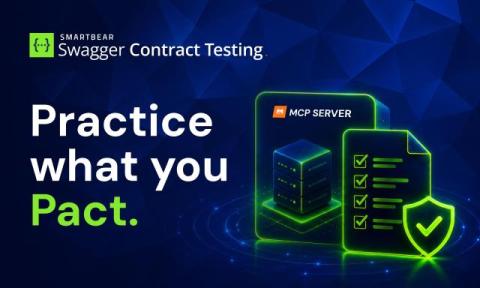
Practice what you Pact : Catch breaking API changes before production in the SmartBear MCP

There’s something satisfying about contract testing the contract-testing tool. The SmartBear MCP Server is the integration layer between AI coding assistants and the PactFlow API, so when we decided it needed Pact consumer tests of its own, we were subjecting our own code to the same standards that we recommend.

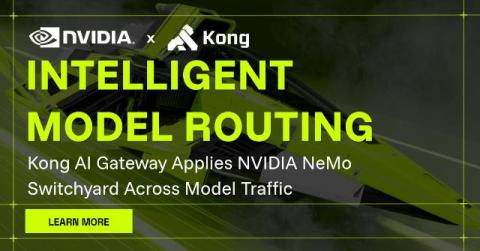
Kong AI Gateway Applies NVIDIA NeMo Switchyard Across Model Traffic

Every team running production LLMs has had the same idea: not every request needs the frontier model. Intelligent model routing (or LLM routing)— choosing a model per request on criteria such as task complexity, cost, latency, or quality — enables more efficient model usage.

What Private Equity Firms Need from a Portfolio Reporting Tool

Most portfolio reporting tools assume the data underneath them is already clean and comparable across every portfolio company. It rarely is. A fund with twenty portfolio companies usually has twenty different ERPs, twenty different charts of accounts, and a reporting team that spends the week before every LP update reconciling numbers by hand.

How to Build Consolidated Multi-Entity Reporting in Power BI

Most groups start consolidating in Power BI the same way. Someone connects each subsidiary's ERP, appends the trial balances and writes a few DAX measures to net off the obvious intercompany lines. It works for two entities. By the fifth, the group P&L no longer ties to the ledgers, and month-end turns into a hunt for the difference. This guide is for the group controller or finance lead who owns that report.