Systems | Development | Analytics | API | Testing

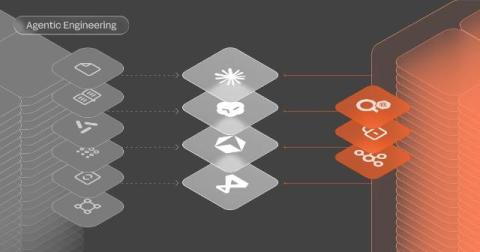
Agentic Engineering and the Agentic Software Factory for Real-Time Data Products

Software workloads that process large volumes of real-time data are becoming common. Decades working in this domain has taught me that building and operating reliable and maintainable real-time data products requires permissive access to the context of the environment. This article explains how to approach agentic engineering and apply it when building real-time data products inside an agentic software factory.

What Are AI Agents Actually Doing When They Talk to Each Other?

You've probably seen the demos. An AI model kicks off a task, hands pieces of it to other AI models, and somehow the whole thing gets done. Emails drafted, code reviewed, reports summarized — all without a human in the loop. While a single agent doing one thing is impressive, the true paradigm shift occurs when transitioning from single-agent to multi-agent AI systems. It looks like magic. It isn't.

A New Dawn: Enterprise AI's Shadow - Trillions of Tokens, Zero Governance

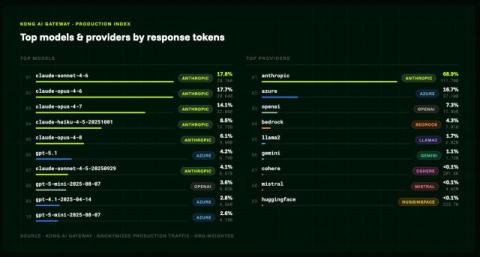
You Can't Govern What You Can't See A decade ago, cloud and API sprawl got ahead of governance, and enterprises spent years trying to account for costs they'd never tracked. Today, we're seeing the same pattern around AI, with hundreds of customers proxying traffic via Kong AI Gateway, which includes LLM, MCP, and agent connectivity. *AI spending will reach $2.59 trillion in 2026.* I regularly like to share what we're seeing in production at Kong.

Building a Data Warehouse with the Astera AI Agent: From Prompt to Insight

Establishing a data warehousing system that meets all your business intelligence targets is by no means an easy task. It traditionally involves profiling source systems, designing a dimensional model by hand, writing the DDL to deploy it, building the load pipelines, and scheduling them to run, work that can take weeks. Astera's manual, step-by-step approach to this is covered in Building a Data Warehouse – A Step by Step Approach.

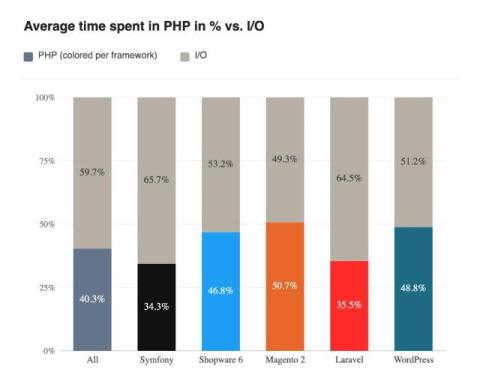
Mythbusting "PHP is rarely the bottleneck," data shows 40% of time spent in PHP

In discussions about PHP performance optimizations and micro-optimizations, there is often someone hand-waving the discussion down with, “PHP is rarely the bottleneck; I/O is.” But is that really true? Our data shows otherwise: across 1240 production projects, the average time spent in PHP is 40.3%. For 34% of these projects, they even spent more than 50% of their time in PHP, not in I/O. So, PHP often is the bottleneck, and depending on the framework, the effect is even higher.

The best GitHub Actions runners in 2026 (and hidden pricing traps to avoid)

GitHub Actions is the default CI/CD tool for most teams. The runners underneath it, the actual machines your jobs run on, are where the pain shows up. Standard GitHub-hosted runners are slow for heavy repos and complex workflows. The faster ones are gated behind Team and Enterprise plans. GitHub Actions pricing is also notoriously hard to understand, especially for macOS.

How to Do Organic Social Media Reporting Across Every Platform Without Blending Vanity Metrics

Organic social reporting collapses into vanity metrics whenever the reporter runs out of time to dive deeper, which is most of the time. Follower counts get compared because they’re comparable at a glance. Engagement rates get quoted because they sound comparable, even though each platform calculates them differently.

Android App Crashes: Causes, Diagnosis, and Fixes

Android app crashes are a nightmare for developers. But they rarely come out of the blue. Most crashes stem from structural causes like leaky memory or sloppy resource management, and most failures will have a root cause that surfaces in either logcat or the stack trace. This post will give you a true Android crash course, showing you the tell-tale signs and the tried-and-tested fixes that work across devices, territories and app utilities.