Systems | Development | Analytics | API | Testing

Modernizing Legacy APIs Without a Risky Rewrite: A Step-by-Step Enterprise Playbook

Modernizing fragile, undocumented APIs can feel risky in conservative enterprises. This guide shows how to prove value safely using a strangler-fig approach, traffic controls, and an API abstraction layer. You will learn how to frame a proof of concept, build a governed façade, and incrementally redirect traffic without disrupting production.

February in Node.js: Release Discipline, Security Signal, and Runtime Progression

February was not defined by major feature drops. It was defined by process hardening, structured release cadence, and continued runtime iteration across both LTS and Current lines. For production teams, this month reinforced three pillars: This is the technical breakdown of what actually mattered.

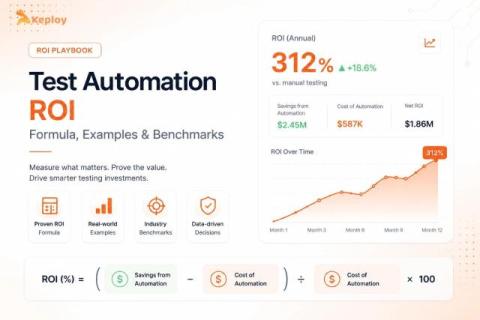
Top Test Automation Best Practices Every Team Should Follow

Test automation has become an essential part of modern software development. In 2026, shipping fast without reliable test automation is almost impossible. Done right, it ensures consistent quality, faster feedback, and fewer production incidents. This guide covers practical test automation best practices used by real engineering teams to deliver measurable results.

Demystifying Data Virtualization: Why it Should Become One of Your DevOps Essentials

Data virtualization can help modern organizations solve the complex challenges that come with managing data. With information scattered across multiple systems, accessing data can lead to operational bottlenecks in your organization.

Why Deployment Flexibility Matters for Enterprise Software

Choosing a software deployment model for modern organizations is complex. Regulatory compliance, data privacy, security, and operational overheads are just some of the factors that need to be considered. These factors can also change over time for reasons ranging from the introduction of new government regulations, to changing business models, to business expansion to new geographies, and more.

Unified Document Processing: Why Standalone IDP Can't Compete with End-to-End Document Automation

Intelligent document processing (IDP) promised a paperless future for businesses and organizations. But despite significant investment, a critical gap often persists between the technological capability to extract data and the organizational ability to actually drive meaningful business outcomes. 78% of enterprises are now operational with some form of AI-powered document processing, yet 52% of staff time remains consumed by manual document tasks.1 This paradox reveals the new IDP market reality.

Maintaining the Vibes: How to Turn AI Coding into Enterprise Value

We are living through a renaissance in software development. In February 2025, computer scientist Andrej Karpathy coined the term "vibe coding" to describe a new state of human-computer interaction. In this model, developers stop acting like bricklayers—manually laying every line of syntax—and start acting like architects. They design the outcome with natural language, and AI handles the construction, translating their vision into working software.

Maintaining compliance when adopting AI in regulated industries

Key Takeaway: Organizations in regulated industries can adopt AI without compromising compliance. Automated testing enables continuous validation of AI-enabled systems while maintaining the predictability, documentation, and audit-readiness that regulators require. In compliance-first industries, such as banking, healthcare, or telecommunications, AI adoption is rarely a simple technology decision. You are often caught between two competing pressures.

Designing Unified APIs for Customer UIs & Internal Tools with Clean Permissions | DreamFactory

A unified API serves both external users and internal operators from one contract while enforcing different capabilities and data scopes. It centralizes authentication, authorization, validation, and auditing so every consumer follows the same rules. DreamFactory defines this as one surface with segmented access aligned to jobs-to-be-done. The goal is consistent behavior across channels, fewer duplicated services, and easier change management.