Systems | Development | Analytics | API | Testing

Thunai Automates Customer Support with AI Agents and Data Streaming

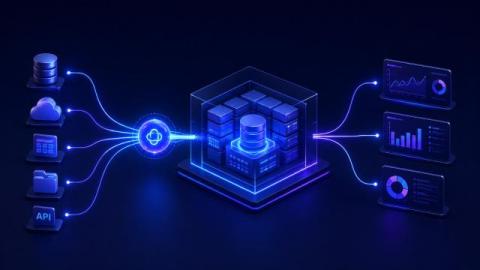
Support teams live in a world of repetitive questions, fragmented tools, and growing customer expectations. Customer service agents bounce between customer relationship management (CRM) systems, ticketing, email, and chat while customers wait, often repeating the same information across channels. Batch-based systems are unscalable for AI: Context is always a step behind, escalations pile up, and it’s difficult to intervene in time.

From Qlik to Quick: How to Transform Qlik Dashboard Analysis With Hidden Insights AI

The gap between having data and getting actionable insights has always been a challenge in business intelligence. Users face dashboards filled with information but struggle to answer critical questions without exporting to Excel, waiting on developers, or missing key trends hidden in their filtered data. But with technological advancements like natural language AI agents, users can access insights and patterns they might otherwise miss.

Hybrid by Design: The New AI Mandate

For the better part of a decade, the enterprise technology mandate was simple: “cloud first,” or more pointedly “cloud only.” Modernizing meant moving to the public cloud, and on-premises architecture was viewed as legacy infrastructure to be maintained until it could eventually be migrated. Fast forward to today, that narrative has shifted dramatically, with AI as the major catalyst.

Building a vacation rental analytics dashboard in Yellowfin

Running a vacation rental is a laborious task. Communicating with guests, managing cleaning staff, developing a pricing strategy… It's all time-consuming work. What makes it harder is that many decisions are made with partial information: a sense that “this month felt busy,” a hunch that prices might be too low, or a vague feeling that one booking channel is starting to dominate. That’s how intuition quietly replaces evidence.

The next step in your data quality program is data integrity

Many organizations run data quality programs that, on the surface, serve teams well enough. They validate data, flag missing fields, remove duplicates, and reconcile reports. Most of the time, that feels secure enough. When teams collaborate and compare datasets, discrepancies often appear but are dismissed as negligible. Fixing them is built into workflows and job descriptions, even if it takes hours or days. This approach is starting to show its age.

Building Bitrise's AI platform: Scaling AI features across teams

This is the fourth and final installment in our series about bringing AI to Bitrise. In Part 1, we explained why we built our own AI coding agent. Part 2 covered our browser-integrated AI Assistant. Part 3 detailed how we brought AI to the Bitrise Build Cloud. In this final post, we'll explore how we unified these efforts into a cohesive AI Platform.

Multi-agent AI systems need infrastructure that can keep up

When you're building agentic AI applications with multiple agents working together, the infrastructure challenges show up fast. Agents need to coordinate, users need visibility into what's happening, and the whole system needs to stay responsive even as tasks branch out across specialised workers. We built a multi-agent travel planning system to understand these problems better. What we learned applies well beyond holiday booking.

From data to charts: How to build a dashboard in Yellowfin

Without a fuel gauge in your car, you'd have to rely on gut feeling to know when to fill up, and that's risky. You might end up stranded on an empty road without gas. The same principle applies to software we use every day. Embedding analytics (charts, graphs, reports and dashboards) into your app means your users can base their decisions on fast, powerful visualizations of real-time data.

The Future of Digital Experience is Autonomous, so is Testing

The digital economy has upgraded from simple transactional interactions with users. Now consumers demand the Autonomous Digital Experience (ADE) – the customer journey is driven by predictive, self-learning systems, which is essential for competitive success. This is driven by Predictive Personalisation, which uses machine learning to predict personalised affinity and intent of user actions, delivering personalised content, products and messages in real-time.

From Strategy to Action: See Konnect Metering & Billing in Motion

See how easily Konnect Metering & Billing transforms API and AI traffic management into new revenue streams. We've talked about why 2026 is the year of AI unit economics. There, we explored the "2025 hangover" where organizations realized that without financial governance, AI isn't just a science project but has become a margin-bleeding cost center. But "governance" and "monetization" shouldn't just be buzzwords in a resolution; they need to be part of your active infrastructure.