In the previous part of this series, we optimized our Lambda function. However, our API is open to the public — anyone with the URL can use it and get a response. In this take, we are going to secure our API using a tool called Amazon Cognito. This will only allow authenticated users access to our endpoints. Ready? Let’s go!
Ruby is a wonderful language, made for humans first and machines second. It is easy to read and write. There are plenty of ways to write anything, and you can often guess its standard library by typing the name of the method you would have chosen yourself. Because of this, Ruby's arguments are very flexible, which lets us express our APIs very clearly. But this comes with a drawback: Ruby is quite hard to parse for C extension developers!
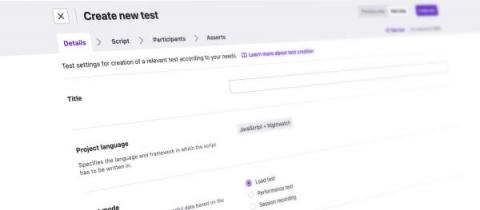
This article is the last in a series of overviews of our new UI. You can find the others here: This time we will dive into the changes we’ve made in the analysis.
CSS is very distinct from other web standards. Cascading Style Sheets, also known as CSS, is a design language employed to create web pages more elegantly designed. An element is selected and styled based on a selector. HTML elements can be styled using CSS selectors. With CSS selectors, you can choose several elements simultaneously. Implying them is valuable if you desire to assign the exact style to more than one HTML element since you won't require to write the exact code twice.
Enterprises have long relied on monolithic applications to run their operations and provide different functions and services to their customers. Monolithic software is designed to be self-contained; components of the program are interconnected and interdependent. If any program component requires an update, the whole application must be redeployed. As enterprises continue to grow their customer base, they will need to upgrade and scale their monolithic architecture.
Deploying models is becoming easier every day, especially thanks to excellent tutorials like Transformers-Deploy. It talks about how to convert and optimize a Hugging face model and deploy it on the Nvidia Triton inference server. Nvidia Triton is an exceptionally fast and solid tool and should be very high on the list when searching for ways to deploy a model. If you haven’t read the blogpost yet, do it now first, I will be referencing it quite a bit in this blogpost.
Organizations have been focused on enhancing customer experiences to enable quicker responses to services and to provide localized behavior for many years now. However, with the Internet of Things (IoT), Smart Cities, Gaming technologies and Self-Driving Cars going more mainstream, there is an even greater need for organizations to react faster to customer behavior and bring solutions closer to the customers.